State launches incentive program to recruit young engineers amid workforce shortage


Illinois transportation officials are launching a student loan repayment program to attract and retain new engineers amid a nationwide workforce shortage. The initiative offers up to $60,000 in repayment assistance over four years for eligible employees.

Photo: ThisisEngineering/Unsplash

The Rebuild Illinois program along with other workforce initiatives, including internships and apprenticeship partnerships with private industry, will repay up to $60,000 in student loans for selected engineers through a new IDOT pilot program aimed at young engineering talent.


by Aidan Klineman
Medill Illinois News Bureau / Capitol News Illinois


SPRINGFIELD - The Illinois Department of Transportation announced this week it will soon repay up to $60,000 in student loans for eligible employees over four years as part of an initiative to lure recently graduated engineers in an increasingly competitive job market.

The Higher Education Student Loan Repayment Assistance for Engineers Pilot Program will reimburse 50 Illinois-educated engineers up to $15,000 annually after four years of service at the agency. IDOT hopes to incentivize young talent to remain in the state and the field, citing data from the American Council of Engineering Companies that shows a national shortfall of approximately 20,000 engineers per year due to retirements or departures from the field.

“At a time when workforce challenges continue to impact the engineering industry and public sector alike, this initiative will help attract and retain the next generation of transportation professionals needed to deliver critical infrastructure projects across Illinois,” Kevin Artl, president and CEO of ACEC Illinois, said in a statement announcing the initiative.

The student loan repayment program is the latest effort by Gov. JB Pritzker and the state to spur economic growth by retaining young talent. In February, the Illinois Retail Merchants Association launched an apprenticeship program for emerging Illinois retailers, and late last month, Pritzker announced public and private partnerships with computing giant IBM that will bring 500 apprenticeships to the company’s new innovation hub located in Chicago’s quantum park.

The program is funded by IDOT, with funds allocated as part of the Pritzker administration’s ongoing Rebuild Illinois efforts and paid out as bonuses. Rebuild Illinois has made significant investments in Illinois infrastructure projects since fiscal year 2020.

Massive infrastructure investments augment engineering needs

State-employed engineers are needed to support the Rebuild Illinois infrastructure program, passed in the first year of the Pritzker administration in 2019 and continued since then. The latest six-year plan calls for investing $50.6 billion in infrastructure, including $32.5 billion for transportation projects exclusively: the construction and maintenance of roads, bridges, public transit, freight and passenger rail, aeronautic facilities and ports.

This is not the first time IDOT has targeted young engineering talent. Last year, the agency implemented an “Intern to Hire” program meant to attract college students to civil engineering internships with the department by providing direct pathways to full-time employment.

The need to fill engineering positions at IDOT is also driven, in part, by federal legislation encouraging new projects. In 2021, President Joe Biden signed the $1.2 trillion Infrastructure Investment and Jobs Act, which allocated over $17 billion to Illinois public works projects over five years. “We have more projects than ever at IDOT right now, thanks to the capital program and funding at the federal level,” Guy Tridgell, director of communications for IDOT, said. “And we need engineers to do that work.”

According to IDOT data, the state has invested over $24 billion in Illinois highway projects through Rebuild Illinois since the 2020 fiscal year. The state hopes young engineers will take advantage of these new jobs incentives and meet the demand for continued infrastructure investment.

Public sector recruitment for the long term

In addition to helping accomplish what Rebuild Illinois set out to do, Tridgell hopes the student loan repayment incentives will inspire young engineers to pursue long-term careers in public service.

“We’re aggressively taking a look at a variety of strategies to get young engineers, in particular, to come and work for the state,” Tridgell said. “It’s a good career — you learn a lot about the profession and you can make a real difference in your community.”

Sen. Ram Villivalam, D-Chicago, initially sponsored legislation calling for the program. He said he hoped the incentives would encourage students to pursue engineering careers with reduced financial pressure.

“We know that access to higher education is challenging,” Villivalam told Capitol News Illinois. “So making sure that young students and folks looking at different career opportunities understand that there are tools available to them to make it more affordable, make it more accessible to pursue a career in engineering.”

Republican Leader proposes scholarships amid delay

In addition to the Pritzker administration's IDOT loan repayment program, Republicans are also working to assist the creation of new engineers for the state.

Senate Republican Leader John Curran, R-Downers Grove, is a lead sponsor of Senate Bill 3855, which would create scholarship and living stipend incentives for engineering students attending Illinois public universities at the front end of their higher education careers. Curran supports the student loan repayments in addition to his own proposal, but noted that the repayments have been delayed.

“I’m glad they’re moving forward with it. It’s well past time,” Curran told Capitol News Illinois. “We are behind on capital.”

Similar to the student repayment plan, Curran’s scholarship bill requires eligible students to commit to working for IDOT for at least three years. He argues that scholarships would unlock more opportunities for students and help assuage financial concerns that arise from college decisions sooner.

“It is a way to help not only lock them in early, but also a pathway to pay for school,” Curran said. “It’s a win-win.”

Curran’s bill was assigned to committee and is currently awaiting a hearing, with a deadline of Friday.


Aidan Klineman is an undergraduate student in journalism with Northwestern University’s Medill School of Journalism, Media and Integrated Marketing Communications, and is a fellow in its Medill Illinois News Bureau working in partnership with Capitol News Illinois.

Capitol News Illinois is a nonprofit, nonpartisan news service that distributes state government coverage to hundreds of news outlets statewide. It is funded primarily by the Illinois Press Foundation and the Robert R. McCormick Foundation.


TAGS: Illinois engineering student loan program, IDOT workforce recruitment initiative, Rebuild Illinois infrastructure funding jobs, engineering shortage Illinois public sector, state loan repayment engineering incentive

How to find the ideal contractor to build your new home


Breaking ground on a new home represents one of the most significant milestones in life. For residents across Champaign County, from the quiet streets of Mahomet to the bustling neighborhoods of Urbana, the prospect of building a custom house brings immense excitement.

New home built on the side of a hill


by Casey Cartwright
Contributing Writer


The success of your home-building project hinges entirely on the professional you choose to lead it. This guide will show you how to find the ideal contractor to build your new dream home.

Defining Your Needs and Wants

You must understand exactly what you want before you pick up the phone to call a builder. A contractor cannot provide an accurate estimate or timeline if your vision remains a vague concept. You should sit down and document the specifics of your project. Determine the size of the home, the number of bedrooms and bathrooms, and the architectural style that appeals to you.

It helps to separate your list into non-negotiables and optional features. You might absolutely require a three-car garage and a main-floor master suite, while hardwood floors throughout the second level might remain a "nice-to-have" if the budget allows. This distinction helps potential contractors understand where they can value-engineer the project to meet your financial goals. When you approach builders with a clear scope of work, you present yourself as a serious client ready to move forward, which results in quicker, more accurate responses.


A couple of building contractors at work
Photo: Annie Gray/Unsplash

When choosing a building contractor, focus on a good fit. Look at quality and realistic timelines, not just the lowest price. Quality work and open communication from start to finish are the key to building a beautiful new home.

Researching Potential Contractors

Champaign County offers a close-knit community where reputation matters. You should start your search by tapping into local networks. Ask friends, family, and colleagues who have recently built or renovated homes about their experiences. Personal recommendations can provide the most honest insight into a builder’s reliability and communication style.

You can also expand your search by observing active construction sites in your neighborhood. If you see a job site that looks clean, organized, and active, write down the name on the sign. Local real estate agents and lenders are also excellent resources. These professionals work with builders daily and know which companies consistently deliver quality results on time. They can steer you toward reputable firms and away from those with a history of problems.

Checking Credentials and Licenses

Legitimacy creates the foundation of trust. You simply cannot afford to hire a builder who operates in the shadows. A professional contractor must possess the appropriate business licenses to operate in Illinois and within specific municipalities, such as Champaign or Urbana. These credentials demonstrate that the builder understands local building codes and zoning regulations.

Verifying these credentials requires you to ask for proof of licensure during your initial conversations. You should also inquire about their professional affiliations. Membership in organizations such as the National Association of Home Builders or local home builder associations indicates a commitment to professionalism and continuing education. These builders typically stay up to date on the latest energy-efficiency standards and safety protocols.


New home built on the side of a hill
Photo: Paul Brennan/Pixabay

When doing the initial leg work looking for a contractor, review photos of their past work and ask to visit sites of current projects in the works.

Reading Online Reviews and Testimonials

To find the ideal contractor to build your new home, you should solicit digital and personal feedback about professionals you’re considering. Read reviews on platforms like Google, Facebook, and the Better Business Bureau. While a single negative review shouldn't necessarily disqualify a candidate, you must look for patterns in the feedback. Major red flags include multiple complaints about hidden costs, poor communication, or abandoned job sites.

Pay close attention to how the contractor responds to criticism online. A professional response to a bad review shows that the business owner cares about customer satisfaction and tries to resolve disputes. You can also ask the contractor for references from past clients. Speaking directly with a former customer lets you ask specific questions about how the builder handles challenges that arise during construction.

Interviewing Multiple Contractors

You should never hire the first person you meet without comparing them to others. Aim to interview at least three potential builders. Treat these meetings like job interviews where you are the employer. You need to gauge not only their technical competence but also their communication style.

Ask pointed questions during these meetings. Inquire about their current workload and how many projects they manage simultaneously. Ask who will be present on the job site daily and who serves as your primary point of contact. You need to know if they use their own employees or rely heavily on subcontractors.

Checking Insurance and Bonding

Construction sites present inherent dangers. Accidents happen, and you must confirm that you don’t carry the financial liability for them. Your contractor must hold comprehensive general liability insurance and workers' compensation insurance. General liability covers damage to your property, while workers' compensation covers injuries to the crew.

Request a certificate of their insurance and verify that the policy remains active. Also, ask about bonding. A surety bond protects you if the contractor fails to complete the job or pay their subcontractors. This financial safety net ensures that there are no liens on your new home due to the builder’s financial mismanagement.

Understanding the Contract

The contract serves as the roadmap for the entire build. You should never start work on a handshake agreement. A professional contract protects both parties by clearly outlining expectations. It must include the start date, the projected completion date, the payment schedule, and a description of the materials.

Pay particular attention to the termination clause and the dispute resolution process. You need to know your options if the relationship sours. The contract should also define the process for change orders. Changes inevitably happen during construction, whether you decide to move a wall or upgrade the cabinetry.

Maintaining Open Communication

The relationship does not end once you sign the contract; it shifts into high gear. Communicating effectively with your home builder is a must for a successful and smooth project. Open lines of communication prevent small misunderstandings from becoming expensive errors. You should establish a regular check-in schedule with your builder, such as weekly on-site meetings or a Friday email update.

You must also play your part as a good client. Make decisions promptly when the builder asks for your input on tile colors or faucet styles. Delays in your decision-making process halt progress on the site. If you have concerns, voice them immediately rather than waiting. Mutual respect and clear dialogue keep the project moving forward.

Building Your Dream Home with Confidence

Building a new home in Champaign County offers the chance to create a space that perfectly suits your lifestyle. While the construction process involves thousands of details and decisions, hiring the right team makes the journey manageable and even enjoyable. By defining your needs, conducting thorough research, and verifying credentials, you stack the odds in your favor.


About the author ~
Casey is a passionate copyeditor highly motivated to provide compelling SEO content in the digital marketing space. Her expertise includes a vast range of industries from highly technical, consumer, and lifestyle-based, with an emphasis on attention to detail and readability.


TAGS: Rebuilding from a hurricane is long and arduous, American Red Cross can help after a disaster, Rebuilding homes and community infrastructure, Coordinating volunteer groups with clean-up

Illinois land improvement association host annual trade show February 1st and 2nd


GALVA - The Illinois Land Improvement Contractors Association (ILICA) will be hosting its annual trade show February 1-2 at the Isle Casino Hotel in Bettendorf, IA. The trade show opens on Thursday, February 1 starting at 1 pm until 5 pm, and again on Friday, February 2 from 8 am to 12 pm.

The trade show includes more than 35 construction industry exhibitors. The event is mainly tailored for landowners, agribusiness professionals, conservationists, contractors, and ag producers but is also open to the general public. There is no charge for admission, and registered attendees are automatically entered in a cash drawing worth $500.
"We are excited to continue to showcase our strong network of professional members and partners that play such a critical role in the implementation of conservation across the state," said Ryan Arch, Executive Director of Illinois LICA. "Illinois’ continued conservation efforts require collaboration and communication, and our hope is that by making our exhibitors and members more accessible we can further assist with this process."

Illinois LICA has hosted a trade show as a regular staple of their Annual Convention & Members’ Meeting for 65 years. This year's annual convention offers numerous educational seminars, septic license CEU training and an awards banquet.

Show goers can talk to industry professionals and manufacturers for latest trends, technology and equipment available for excavation, earthmoving, landscaping, drainage, on-site waste treatment, paving, reclamation, and trucking.

"By offering free trade show admission during our convention, our goal is to help make connections for individuals outside of our group to further Illinois LICA’s mission and commitment to natural resource conservation," Arch said.

For more information, visit www.illica.net/events or call (309) 932-1230.


Four signs you need a new roof over your head


Communication-76/Pixabay

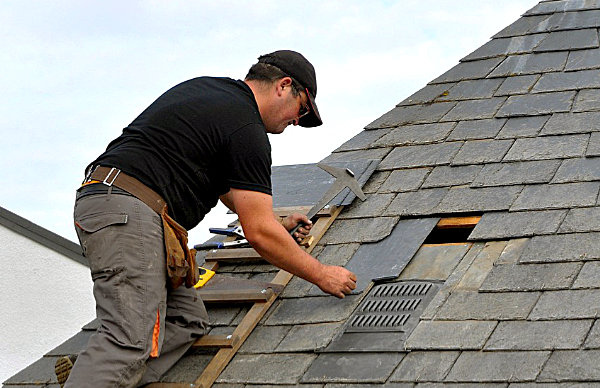
SNS - A roof is one of the most important components of any home. It protects the structure and its inhabitants from harsh Illinois weather, debris, and even pests. However, over time, roofs can become damaged due to age or extreme conditions.

Knowing when it’s time to re-roof your house can save you money in the long run, as well as protect your home’s structural integrity. In this article, we will discuss the signs to look out for that indicate when you should consider re-roofing your home. Here are four signs when you need re-roof your home or rental property.

#1 Cracked or Missing Shingles

Shingles are thin strips of material that form the surface of your roof. It looks like overlapping triangular tiles. If you notice that your shingles are cracked, missing, or curling up on the edges, then it’s a sign that they need to be replaced. This can happen due to age or exposure to extreme weather conditions such as hail and wind. Missing shingles can also result from poor installation or poor maintenance.

While this can be an easy fix, you still need to consider hiring experienced roofing contractors like Mighty Dog Roofing to ensure that your shingle replacement is done correctly. If you don’t replace your missing or cracked shingles, then it can lead to more damage and cost more money in the long run.

#2 Sagging Roof

If you notice that your roof is sagging, it could be a sign of a structural issue with your roof decking, which supports the entire roof structure. If this is the case, it’s crucial to have a professional to inspect your roof right away, as sagging can lead to catastrophic damage and costly repairs.

It could also be due to poor ventilation or inadequate insulation, both of which can contribute to premature wear and tear on your roof. In any case, it’s best to have a professional inspect your roof and determine the cause of the sagging so that it can be addressed promptly.

#3 Sunlight Coming Through Your Roof

If you notice that sunlight is coming through your roof, then it’s time to re-roof. This could mean that there are gaps or holes in your roof that need to be patched. These gaps can allow moisture and pests into your home, as well as cause energy loss due to heat escaping from the house.

The good news is that patching these holes or gaps can usually be done relatively quickly and inexpensively. However, if there is extensive damage to the roof, then it may be time to consider re-roofing your home.

#4 Age of Roof

The age of your roof can also be a factor in determining whether or not you should re-roof. Most roofs are designed to last around 20 years, and after that, they can start to deteriorate due to age and weather conditions. If your roof is more than two decades old, it’s probably time to consider re-roofing your home.

Good thing is, modern roofs are made of much more durable materials than those used in the past and can last for up to 50 years with proper maintenance. So, when it’s time to re-roof, you can be sure that your new roof will last a long time.

How to Re-roof Your House

The first step to re-roofing your home is to contact a roofer for an inspection. A professional roofer will be able to assess the condition of your roof and advise you on the best course of action. This could mean anything from repairing small issues to completely replacing the roof.

If it’s determined that you need to re-roof, then the roofer will be able to recommend materials and products that are best suited for your home. It’s important to take their advice, as they have a lot of experience in this field and know what works best. Once you have decided on materials and products, the roofer will be able to provide you with an estimate for the cost of the project.

Common Cost for Re-roofing

The cost of re-roofing your home will largely depend on the size of your roof, the materials you choose, and any additional services like repairing existing damage. Generally speaking, re-roofing projects can range from a few thousand dollars to over $10,000 depending on the size and complexity of the job.

Re-roofing your home is not an easy job and it is very important if there is a need. By keeping an eye out for signs of damage and taking action to address any issues, you can help ensure that your roof lasts as long as possible and protect the value of your home.

If you suspect that your roof may need to be replaced, then don’t hesitate to contact a professional roofer for an inspection and advice. With the right materials, a good plan, and proper maintenance, you’ll be confident knowing that your new roof will protect your home for years to come.


Work on I-74 could affect travel to CU


If you commute to work in Urbana or Champaign, you will want leave a little earlier for work starting this Monday. The Illinois Department of Transportation announced on Friday that pavement and guardrail repairs will begin starting this Monday on Interstate 74. Drivers should expect routine delays and drive through the work area at lower speeds.

With IDOT expecting the work to last around seven weeks from start to completion and students returning to the University campus later this month, Sentinel area drivers may want to plan alternative routes on trips into CU to avoid congestion in the construction area starting near High Cross Road just east of Cunningham Avenue in Urbana heading west to Prospect Avenue in Champaign.

Nighttime lane closures will be in effect from 8 pm to 6 am Sunday through Thursday, with at least one lane open in each direction at all times.

IDOT urges drivers to pay close attention to signs in the work zones and obey the posted speed limits to avoid accidents. Motorists should be be on high alert for rapidly changing traffic flow.

Last week, on August 1 near a construction zone on westbound Interstate 74 between Fithian and Oakwood, a semi driver was lost his life while another motorist was hospitalized with life-threatening injuries in two separate accidents. Ronald C. Schaer of Danville, who was hospitalized life-threatening injuries, was ticketed for failure to reduce speed to avoid an accident.

Drivers are asked not use mobile devices and be prepared to avoid workers and construction equipment.


Editor's Choice


Food safety certification course planned in Danville, Gilman and Champaign

Food service workers and aspiring culinary professionals can earn food safety certification through upcoming University of Illinois...


More Sentinel Stories