Photo of the Day - January 14, 2021
32 juniors make Unity's first semester high honor roll
Malia Fairbanks, Phillip Hartke and Grace Renfrow are three of 32 members of the junior class who achived a grade point average of 3.75 or better at Unity High after the first semester. Forty-eight students from the class of 2024 will also be recognized as high honors students on January 26 along with the entire list of students below who made the honor roll or attained high honors status from their efforts between August 19 and December 22.
Students earning a GPA of 3.20 to 3.74 are recognized as honor students.
Seniors
High Honor: Emma Aders; Evelyn Atkins; Rachel Branson; Marissa Charleston; Gracie Cox; Brooke Garretson; Shay Haluzak; Maggie Hewing; Elizabeth Hulilck; Taylor Joop, Olivia Kleiss; Madelyn Moore; Korie Novak; Kimberely Pruitting; Daisy Rawlings; Annie Schmidt; Mia Shannon; Lillian Styan; Jonah Sullivan; Cerra Thompson; and Kyleigh Weller. Honor: Caroline Bachert; Alyson Bagwell; Brandon Bates; Isabella Bryant; Corbin Cox; Summer Day; Nathan Drennan; Corrina Duvall; Emma Felsman; Shannon Flavin; Alyssa Hartman; Ellen Henning; William Jokisch; Evan LeFaivre; Emily Lopez; Suzanne Migut; Andrew Miller; Aubryanna Norman; Connor ODonnell; Brady Porter; Chloee Reed; Conner Sharp; Ryan Vasey; Nolan Wallace; Caden Wingler; and Laela Zook.Juniors
High Honor: Katelyn Allen; Marie Baxley; Emma Bleecher; Zayne Bonner; Grace Brock; Sarah Butler; Thomas Cler; Sophia Darnell; Nolan Decker; Allyson England; Malia Fairbanks; Harper Hancock; Cameran Hansen; Phillip Hartke; Elise Johnson; Annabell Jokisch; Delaney Kamradt; Carli Keller; Lauryn Kennedy; Carson Kleparski; Addison Montgomery; Sydney Olson; Kaitlyn Reedy; Grace Renfrow; Samantha Ruggieri; Allison Shonkwiler; Sara Steffens; Erika Steinman; Shelbee Taylor; Isabella Warner; and Destiny Williamson. Honor: Savannah Alagna; Cody Broadfoot; Calli Chandler; Marshall Church; Kystal Crossin; Evelyn Eastin; Hunter Evans; Hailey Flesch; Grace Frye; Tristania Hansen; Bridget Henry; Taylor Henry; Tyler Hensch; Clayton Jamison; Payton Kaiser; Blake Kimball; Macie Knudsen; Alexandrea Lemon; Alida Maggio; Claire Markstahler; Cameron Marvin; Hanna Mataya; Nolan Miller; Cole Newell; Konnor Orwick; Trustan Price; Madeline Reed; Dillion Rutledge; Alaina Scroggins; Kelley Street; and Taylor Wiersema.Sophomores
High Honor: Rachel Aders; Caleb Amias; Emily Anderlik; Emmalee Atkins; Mary Bryant; Anthony Chaney; Anna Clark; Lauren Cooke; Hunter Duncan; Brendan Graven; Roger Holben; Erin Lopez; Andrew Manrique; Jayci McGraw; Jolie Meyer; Lauren Miller; Dylan Moore; Andrew Mowrer; Mason Perry; Abigail Pieczynski; Julia Ping; Audrey Remole; Sarah Rink; Reece Sarver; Kaitlyn Schweighart; Annabelle Steg; Raena Stierwalt; Sophia Stierwalt; Avery White; and Luke Williamson. Honor: Calvin Baxley; Maria Buffo; Haley Carrington; Jayden Clem; Annah Cloin; Joshua Davidson; Paige Farney; Boden Franklin; Brandon Goyne; Haylen Handal; Tyler Liffick Worrell; Kayla Nelson; Ellen Ping; Cale Rawdin; Alivia Renfoe; Emma Stratton; Emmilia Tieman; Ava Vasey; Garrett Wingler; and Kara Young.Freshmen
High Honor: Evelyn Albaugh; Payton Bradley; Connor Cahill; Analyse Carter; Rebecca Carter; Kendra Cromwell; Desire De Los Santos; Taylor Drennan; Natalie Ellars; Bailey Grob; Madison Henry; Brooke Hewing; Shelby Hoel; Caroline Jamison; Eden Johnson; Cassidy Keller; Caelyn Kleparski; Reagan Little; Zachary Lorbiecki; Tatum Meyer; Eric Miebach; Katelyn Moore; Lauren Neverman; Dalton O’Neill; Anna Polonus; Ava Price; Meredith Reed; Maci Richmond; Briana Ritchie; Isaac Ruggieri; Aubrey Sanders; Aubrey Schaefer; Olivia Shike; Grant Siuts; Logan Siuts; Carsyn Smith; Piper Steele; Lily Steffens; Brock Suding; Ruby Tarr; Andrew Thomas; Henry Thomas; Breanna Weller; Jeremy Wells; Erica Woodard; Abigail Woolcott; Emberly Yeazel; and Madysen York. Honor: Brendan Bachert; Kiersten Bash; Nathan Bleecher; Brenlee Dalton; Elianna Duo; Kamryn Edenburn; Emma Fish; Mike Gray; Margaret Ingleman; Bayleigh Jones; Jocelyn LeFaivre; Trevor McCarter; Dean Niswonger; Gabriel Pound; Zachary Renfrow; James Rennels; Amelia Rinella Flores; Santiago Sanchez Castillo, Erin Sanders; McKayla Schendel; Carly Scroggins; Matthew Short; Josephine Stierwalt; Lynndsay Talbott; Kate Thomas; Aileen Vasquez Munoz; Aidan Ward; Bailey Wayne; Bryson Weaver; Kolten Wells; and Tanner Wells.Bill Banning Locked Seclusion and Face-Down Restraints in Illinois Schools Stalls as Lawmakers Run Out of Time
Jennifer Smith Richards, Chicago Tribune
Jodi S. Cohen, ProPublica
Illinois lawmakers had the support to ban schools from locking students alone in a room or physically restraining them face down. But they didn’t have the time.
A yearlong legislative effort to end decades of controversial practices that often left confined children crying for their parents and tearing at the walls ended without a vote in the Illinois House on Wednesday as the legislative session expired.
The bill had unanimously passed the Senate on Tuesday and was on track for a concurrence vote in the House, but other measures put up for approval instead and last-minute maneuvering by some private schools scuttled plans to call the seclusion bill for a vote.
“Once again, Illinois has failed its children and lost the opportunity to reform school practices that are a serious threat to the safety and well-being of students with disabilities,” said Zena Naiditch, president and CEO of Chicago-based Equip for Equality, a federally appointed watchdog for people with disabilities. She praised the bill’s sponsors for their efforts.
The sponsors quickly pledged to reintroduce the legislation to the new General Assembly in the next couple of weeks.
The legislation would have required any school that receives state funding to make a plan to reduce — and eventually eliminate — its reliance on any kind of timeout and restraint over the next three years.
But a main feature of the bill was an immediate ban on schools’ use of locked seclusion rooms and prone, or face-down, physical restraints. In addition, schools would have been told they could seclude students in unlocked spaces and use other types of restraints only when there is an “imminent danger of serious physical harm” to the student or others. Access to food, water, medication and a bathroom would have been mandatory.
The Illinois State Board of Education would have been directed to sanction schools that didn’t comply with the legislation.
On Tuesday night, advocates for people with disabilities thought their pleas to end the controversial practices would be answered. Some were prepared to issue statements congratulating legislators.
But other issues were pressing as the General Assembly wrapped up its term, including a sweeping criminal justice reform bill, as well as the selection of a new House speaker.
The legislation “had critical components to protect students from harmful and abusive use of seclusion and restraint practices in school,” said Chris Yun with Access Living, a nonprofit that advocates for people with disabilities. “I am very disappointed that resistance from private facilities blocked Illinois from moving forward in the right direction.”
Lawmakers said the biggest challenge to the bill was some schools’ insistence on the need for face-down restraints — though more than 31 states have banned prone restraints because they can obstruct a child’s breathing. Those schools have argued that prone restraint is as safe as other restraints when performed correctly and that sometimes it’s the most effective way to deal with students in crisis.
“We just wish that there would be a way to have a compromise so it is not totally banned but there are qualifiers” and it could be used in some situations, said Sylvia Smith, executive director of Giant Steps, a Lisle school for students with autism. “It is just that sometimes some of our kids, if they have a meltdown, they get extremely agitated and strike out and sometimes they try to hurt themselves or hurt others.”
Such opposition “helped muddy things” ahead of the House vote, said the bill’s sponsor in the Senate, Arlington Heights Democrat Ann Gillespie. Still, she said that wasn’t the primary reason for the bill’s demise.
“We had a fully agreed bill,” said Rep. Jonathan Carroll, a Northbrook Democrat who sponsored the House bill, but “just ran out of time.”
Now the process must begin again with the new General Assembly, which was sworn in Wednesday. Gillespie said the bill would be reintroduced by February. She and Carroll said they are determined to strengthen protections for children.
“We’ve poured over a year of our time into this legislation because we must discontinue these horrific and barbaric practices,” Carroll said. He had been secluded as a child and has spoken about the harm it caused.
The lawmakers are trying to amend a law on seclusion and restraint that has been in place for about 20 years; that law is more vague about when school districts can use these interventions and led to widespread misuse, a 2019 investigation by ProPublica and the Chicago Tribune found.
State rules adopted last April in response to the investigation had placed stricter limits on the use of seclusion — including a prohibition on isolating students behind a locked door — but did not ban prone restraints. Critics of seclusion and restraint had argued that it was important to pass a state law protecting children from these practices, rather than rely on rulemaking.
“The Quiet Rooms” investigation found that about 100 Illinois public school districts had secluded students more than 20,000 times in a 15-month period from September 2017 to December 2018, often to punish children for poor behavior or to force them to comply with workers’ commands. Those reasons weren’t valid under existing state rules on seclusion, but there was no state oversight or enforcement.
Students also had been physically restrained, or held by workers so that they could not move — sometimes pinned on the floor — at least 15,000 times in the same time period, records showed. Workers often restrained students after they were disrespectful or profane and when there was no stated safety concern.
After “The Quiet Rooms” was published, ISBE mandated that all school districts and private schools provide records on their use of seclusion and restraint from the past three school years. Schools also are now required to alert the state within 48 hours of using seclusion or restraint.
In December, ISBE released a summary of the data provided by the schools, revealing at least 10,785 students had been subjected to seclusion and restraint during that three-year period. There were 43,993 incidents of timeout, averaging 30 minutes each, and 53,336 incidents of physical restraint, averaging 10 minutes each.
ISBE found that in nearly 11,000 of those incidents, school workers identified no safety risk before secluding or restraining a student, as required by state law.
Before the Senate’s unanimous vote, Gillespie told fellow legislators that shutting kids inside seclusion rooms “actually tends to exacerbate the behaviors” that school workers are trying to address.
“There are instances where you need to remove the child into a quieter type of environment, but the goal here is to have the school personnel continue to work with the child rather than just locking them up and moving them out,” Gillespie said.
Gillespie told lawmakers that the goal of the three-year planning requirement was for schools to learn alternatives and eventually eliminate the “traumatic interventions.”
“Hopefully schools will learn those techniques and adopt them over time,” she said.
This story was originally published by ProPublica on January 13, 2021. ProPublica is a Pulitzer Prize-winning investigative newsroom. Sign up for The Big Story newsletter to receive stories like this one in your inbox.
Filed under: Education
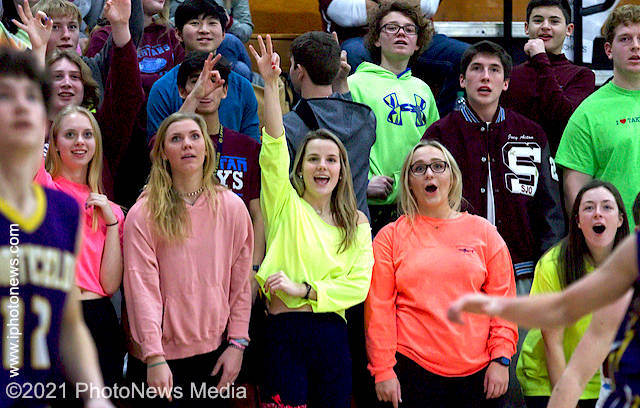
Photo of the Day - January 13, 2021
Spartans pick up home win
Photo of the day: January 12, 2021
166 make 2nd quarter High Honor Roll at SJO
Yesterday, St. Joseph-Ogden High School announced the school's second quarter honor roll receipents. This quarter, 166 students earned High Honor Roll recognition for their academic efforts. Forty-five students in both the sophomore and junior classes secured a GPA above the requisite 3.74.
An additional 77 students who earned grade point average of 3.25 or higher on the school's 4.0 scale also made the honor roll.
High Honor Roll
Freshmen
Aden Armstrong
Owen Baltzell
Samantha Beetz
Chloe Burkhalter
Rachel Divan
Sadie Ericksen
Joseph Frasca
Addison Frick
Grace Getty
Logan Haake
Chloe Harper
Rachel Harris
Brody Hausman
Annabelle Hueber
Tanner Jacob
Kya Jolley
Helene Jones
Tori Kibler
Hayden Lewis
Quinn Lewis
Taylyn Lockhart
Carson Maroon
Addisyn Martinie
Talan Miller
Isaiah Mock
Rowan Musselman
Caleb Ochs
Cole Pruitt
Macy Reed-Thompson
Addison Roesch
Addison Ross
Daniel Santiago
Lucas Skelton
Logan Smith
Drew Thurman
Emma Thurman
Elissia Ward
Colin Wayland
Corbin Wells
Hayden Williams
Peyton Williams
Sophomores
McGwire Atwood
Kaytlyn Baker
Olivia Baltzell
Taylor Burch
Tyler Burch
Maddux Carter
Yamilka Casanova
Ariana Chambers
Gwen Chatterton
Morgan Cramer
Aiden Cromwell
Zachary Dahman
Abigail Dow
Emily Elsbernd
Joselyn Frerichs
Kennedy Greer
Andrew Guelfi
Mikyla Haley
Maya Hewkin
Taylor Hug
Shayne Immke
Peyton Jones
Cameran Kelley
Jacob Kern
Hunter Ketchum
Aaron Lane
Collin Livesay
Haleigh Maddock
Aidan McCorkle
Kyle Meccoli
Teagan Miller
Allegra Pearman
Ty Pence
Jack Robertson
Kirsten Schaefer
Johanna Schmitz
Jack Setterdahl
Isabel Sexton
Paige Siegmund
Trinity Tapia
Payton Vander Logt
VoorheesTaylor
WagleAlayna
WagnerMallory
WardMaggie
Juniors
Tyler Altenbaumer
Kailyn Anderson
Ella Armstrong
Abigail Behrens
Andrew Beyers
Mara Burkhalter
Angela Chahine
Braden Clampitt
Anastasia Conerty
Deanna Cummins
Benjamin Cunningham
Sidney Davis
Zander Dressen
Ashley Eldridge
Jared Emmert
Hannah Fox
Mackenzie Fulk
Brennan Haake
Liam Hamer
Lauren Harper
Kailyn Ingram
Payton Jacob
Alison Kearney
Ava Knap
Ashlyn Lannert
Jacey Lewis
Wyatt Loghry
Kelsey Martlage
Sophia McDade
Ava Miller
Coby Miller
Conrad Miller
Elijah Mock
Jett Morris
Jessica Palmer
Emma Parkinson
Jackson Place
Hope Rajlich
Grace Schmitz
Taryn Sexton
ShoviakAlyssa
StegallLuke
SteinbachRebecca
TrameMackenzie
WellsTaylor
Senior
Crayton Burnett
David Bytnar
Taylor Campbell
Kylie Duckett
Jacob Dwyer
Hanna Eastin
Britney Evans
Dakota Franzen
Isabella Getty
Kale Goff
Atleigh Hamilton
Emmyrson Houston
Lukas Hutcherson
Logan Ingram
Shelby Kofoot
Spencer Lahners
Madigan Loman
Alyssa Maddock
Tyson Madsen
Sophia Martlage
Garren Meeker
Samantha Naylor
Alec Painter
Erin Patton
Aidan Roberts
Indira Robinson
Mazie Ronk
Evan Schmitz
Max Shonkwiler
Tessa Smith
Payton Vallee
Nora Walden
Brayden Wendt
Mikayla Wertz
Logan Wolfersberger
Honor Roll
Freshmen
Chloe Allen
Kaden Allinger
Kyler Brown
Maya Chahine
Garrett Denhart
Cameron Dressen
Grace Goldenstein
Brianna Grant
Amaya Gula
Jayci Hayes
Lauren Lannert
Jake LeVeck
Seth McBride
Shannon McMahon
Zoey Sweet
Braxton Waller
Spencer Wilson
Mitchell Wright
Sophomores
Canyon Alwes
Owen Birt
Ethan Blackburn
Payton Carter
Madelynn Cook
Leah Finley
Grace Flessner
Jessica Gadbury
Joseph Gherna
Hallie Harms
Hayden Henkelman
Aliya Jones
Courtney Myren
Katelynn Oehmke
William Page
Jackson Wetzel
Spencer Wilson
Mitchell Wright
Juniors
Nicolas Anzelmo
Madison Atwood
Alanna Bensyl
Ella Besson
Kennedi Burnett
Zella Fuqua
Hailey Gaines
Avian Gerdes
Alyssa Hamilton
Claire Huffman
Olivia Klotz
Ava Meyer
Jonathan Poulter
Griffin Roesch
Anna Snyder
Regan Uden
Ethan Vanliew
Elijah Weinmann
Seniors
Mason Behrens
Brady Buss
Raegan Crippen
Sarah Dow
Caleb Eads
Emily Fisher
Alexandra Frerichs
Emily Froman
Cailer Kellenberger
Hayden Knott
Ethan Lane
Matthew Lilly
Aiden Livesay
Brock Loschen
Abigail Moberg
Riley Myren
Jackson Rydell
Hannah Umbarger
Aaron Wagner-Dillman
Mitchell Whitlock
Rachel Wilson
Over 180 students at Unity Junior High make Honor Roll
Seventy-nine students at Unity Junior High School earned High Honor Roll recognition for their academic performance during the second quarter of the 2020-21 school year. Meanwhile, the school administration announced another 108 students across the same three grade levels to achieve Honor Roll status.
Alex Martin Bromley
Berkley Jane Cloud
Caleb Benjamin Coy
Hudson Lee DeHart
Danika Ann Eisenmenger
Allison Renee Fenter
Bailee Mae Gadeken
Colton Ray Harmon
Kathryn Clara Knoll
Carson Wesley McCune
Landrey Michelle Mohr
Brooklyn Marie Mumm
Adam Lucas Reedy
Max Warren Rossi
Allyson Lynn Shaw
Isaac Benjamin Siegwald
Evalyn Alexandra Skibbe
Piper Estelle Staley
Grace Lynne Tempel
Jacob Michael Ward
Leah Marianne Watson
Elizabeth Johnna Wayne
Rylan Kade Wolf
Kendal Lea Zerrusen
Grace Michele Bickers
Paige Nicole Bradley
Clare Faustina Bryant
Brody Ray Butler
Cadence Marie Chandler
Addison Tyler Davis
Aidan Dean Ellis
Reese Bella Frye
Journey Maddison Gabbard
Keegan Patrick Germano
Olivia Ashlyn Hall
Walker Dale Hall
Dustin Rose Harris
Broderick Wayne Irwin
Avery Nicole Kamradt
Rush Matthew Little
Cash Cohen McCann
Audrey Claire McDaniel
Sadie Jane Polonus
Evan Alexander Puckett
Skylar Osheania Sanders
Ethan Daniel Schaefer
Lane Edward Sexton
Alyssa Renae Shields
Jackson Leo Smith
Madison Amanda Spohn
Baileigh Marie Thomas
Grace Ann Wherley
Kendall Grace Wysong
Joel Mitchell Yergler
Cameryn Dayle Cobb
Eli Samson Crowe
Ella Jean Darnall
Callie Marie Ellars
Camden Michael Fairbanks
Margaret Rose Garcier
Isabel Grace Grob
Caden Maddox Hensch
Miles Kennedy Johnson
Mylie Emily Margaret Loftsgaard
Claire Lynn Meharry
Mason Robert ONeill
Harry Matthew Polonus
Ty Steven Rodems
Theda Marva Roether
Katie Marie Ruggieri
Vanna Lee Schriefer
Hunter James Shike
Annalise Rose Shunk
Caden Alexander Stierwalt
Ginna Mae Stierwalt
Madelyn Rose Stierwalt
Emma Marie Swisher
Paula Louise Wilson
Crewe William Gene Eckstein
Olivia Breann Egelston
Dane Robert Eisenmenger
Collin William Graven
Kenley Jo Harris
Brooke Autumn Hartman
Joshua Todd Heath
Brayden Jonathon Henry
Tyler Jason Henry
Sophia Katherine Hewerdine
Lucas Alexander Hood
Logan Phillip Jeurissen
Faith Lyn Lampe
Johanna Ilene Langley
Isabelle Joy Levingston
Maxwell Cort McCabe
Deakin Frederick Moore
Isaac Julian Neverman
Dallas Jordan Porter
Mackenzie Rose Pound
Olivia Grace Rawdin
Kyla Lanae Reed
Jillian Brooke Schlittler
Liana Grace Sheets
Shelby Lynn Smith
Lauren Patricia Stratton
Ian John Taber
Sophia Louise Jean Toney
Alexander Lane Wells
Claire Morgan Zorns
Avery Jean Alagna
Lindy Marie Bates
Molly Kay Baxley
Paige Leeanne Brewer
Noah Michael Bryant
Elle Makenna Cheely
Josephine Rose Cler
Madelyn Rae Darnall
Jordan Kathryn Daugherty
Ashlyn Brielle Denney
Kade Ryan Dubson
Ava Maureen Fenter
Catharine Elizabeth Ford
Sophia Safrona Frye
Sophia Ruth Hartke
Lauren Mellissa Hellmer
Dallas Anthony Hollingsworth
Alex Nathaniel Mowrer
Brady James Parr
Camryn Elizabeth Reedy
Ashley Lynn Rennels
Lydia Claire Rossi
Maegan Denise Rothe
Savannah Renee Rubin
Lauren Anne Shaw
Joseph Robert Tempel
Avery Elise Watson
McKinley Mae Weller
Emmerson Matthew Bailey
Sophia Cathryn Beckett
Kolton Andrew Black
Michael Allan Bromley
Dakota Michael Brown-McClain
Bentten Matthew Cain
Logan Reid Church
Jacob Ivan Davidson
Ava Jane Davis
Ezekiel De Los Santos
Nathaniel Gojam DeNeal
Chloey Ryanne Duitsman
Piper Ann Farney
Paige Ann Garretson
Kadence Lynn Goff
Faith Marianne Hall
Caleb James Hoewing
Wyatt Matthew Huffstutler
Sydney Marie Jackson
Andrew Jason King
Elias Anthony Eugene Lawlyes
Kaitlynn Christine McEvoy
Avery Jarrod McGraw
Gracie Marie Meharry
Maliyah Marie Ortiz
Reigna Jolie Price
Taylor Aiyana Marie Prough
Oliver Mason Hyeok Joon Rawlings
Korben Dale Ray
Nolan Scott Remole
Garrett Francis Richardson
Ryan Benjamin Rink
Ryan James Robinson
Braden Allen Roderick
Brock Jacob Schlittler
Abigail Ruth Smith
Daniel Christopher Stein
Grant James Steinman
Owen Michael Taylor
Jacob Howell Thomas
Gavin Henry David Weaver
Jordan Jeanne Whittington
Tessah Rae Williams
Lauren Anne Williams-Scroggins
Nolan Allen Wishall
Village Crier: January 11, 2021
Number of COVID cases on the rise
The number of confirmed cases of the Coronavirus is taking a steep climb this week with 65 new cases identified in the past four days. The rise comes during the projected incubation period predicted by epidemiologists and just a week before Region 6 could possibly bounce back to Tier 2 mitigation and less stringent restrictions.
There are now 97 active cases within the six villages, a level that hasn't been seen since December 1 and the highest level this calendar year. Just six days earlier, The Sentinel area enjoyed its lowest number of positive cases for nearly a five week period.
SJO grad joins real estate firm
Zac White, a graduate from St. Joseph-Ogden High School, has joined The Littlefield Group. Over the past 22 years, The Littlefield Homes has assisted thousands of families buy and sell homes as well as investors interested in commercial property and farm land. White, a Champaign County native received his Bachelors Degree at Western Illinois University. White, a licensed agent and broker, he can be reached at (217) 841-9296 or by email at Zac@littlefieldhomes.com.
Lots on for tomorrow's board meeting
In addition to approving invoices for payment and changes to how St. Joseph invests village funds, The St. Joseph Village Board will vote on resolution to approve the Champaign County Multi-Jurisdictional Hazard Mitigation Plan (CCHMP).
The plan calls for identifying and prioritizing community policies, "actions and tools to implement in order to reduce potential risk and potential for future losses associated with the occurrence of selected natural and technical hazards. The goal is to use the plan to prepare for natural and technical hazards. A draft copy of the plan is available online.
The CCHMP meets the requirements of the Disaster Mitigation Act of 2000, which includes planning objectives established by FEMA, inter-agency coordination as well as coordination of local mitigation planning with the state. Susan Monte, planner from Champaign County Regional Planning Commission will discuss the updated version of the plan.
The board will also take a vote on a Moter Fuel Ordinance and a resolution to wave subdivision regulations in a matter between Rudisill Trust and Arcadia Farms.
Guest Comment: Put away your guns, pipe bombs and hatred
Acts of violence against a marriage partner have never saved a marriage. Violent acts toward family members have never made a family happier. Typically, they create emotional and sometimes physical wounds that are never forgotten. Too many families have suffered because someone in the family became violent.
Violence in our communities and towns always results in pain, division and sometimes even loss of life. Violence typically brings the wrong people together to do bad things. No community, city or state needs this.
The destruction of buildings and businesses are acts of violence and are criminal.
Dr. Glenn Mollette is a syndicated American columnist and author of American Issues, Every American Has An Opinion and ten other books. He is read in all 50 states. The views expressed are those of the author and are not necessarily representative of any other group or organization.
This article is the sole opinions of the author and does not necessarily reflect the views of The Sentinel. We welcome comments and views from our readers.
Guest Comment: Judicial overreach is a Pandora’s box of government encroachment
by Howard C. Self, President
Right To Believe
As 2020 is drawing to a close, we all hope that we are seeing the light at the end of the tunnel in this year of the pandemic. The advent of vaccines is hopeful, yet the United States and other nations face a third wave of COVID infections. And as municipal and state governments impose new restrictions, there is growing concern about impacts on individual liberty and religious freedom. In a recent speech to the Federalist Society, Supreme Court Justice Samuel Alito said, “We have never before seen restrictions as severe, extensive and prolonged as those experienced for most of 2020… the COVID crisis has served as a sort of constitutional stress test. And in doing so it has highlighted disturbing trends that were already present before the virus struck.” Alito went on to cite numerous court cases impacting the free exercise of religion as indicative that “religious liberty is in danger of becoming a second-class right.” Last month, the Supreme Court sided with the Catholic Diocese of Brooklyn and an Orthodox Jewish congregation. In a 5-4 decision, the court ruled that New York could not restrict religious gatherings more than others. In the opinion, Associate Justice Neil Gorsuch wrote, “There is no world in which the Constitution tolerates color-coded executive edicts that reopen liquor stores and bike shops but shutter churches, synagogues, and mosques.” In a similar case resolved just last week, the Catholic Archdiocese of Washington, D.C., filed a suit in federal court against Mayor Muriel Bowser. The mayor had imposed a numeric limit of 50 on religious gatherings, no matter the size of the facility, whereas businesses were limited to a percentage of capacity. Fortunately, the city reneged and issued an amended order that treats religious congregations the same as other entities. But it took a lawsuit to get there. The disturbing trends referenced by Alito are all too familiar to religious leaders, many of whom are alarmed by growing bias and overreach by government officials and the courts, and concerned about protecting their rights to the free exercise of their faiths. Another example of this concern is a case before the District of Columbia Superior Court. Earlier this month, Judge Jennifer M. Anderson issued a “remedies judgment” in the controversial Family Federation for World Peace and Unification International et al v. Hyun Jin Moon et al case, which totally disregards the defendants’ First Amendment rights and due process. The case is sure to be continued through the appeals process. This case before the D.C. Superior Court involves protracted disputes within the Unification Movement founded by the late Rev. Sun Myung Moon. Though it was initially and properly dismissed on First Amendment grounds because it clearly involved religious disputes in which courts cannot intervene, this complex and extremely costly case has been extended by subsequent rulings for more than nine years. It is well-established legal precedent that the First Amendment prohibits the courts from interfering in disputes about the teachings and leadership of religious groups. Yet that is precisely what the D.C. court has done in this case. As evident in both summary judgment and remedies rulings, the court disregarded voluminous evidence of an emerging religious movement wrestling with issues of succession and doctrine. It decided that it could sidestep First Amendment prohibitions and evaluate the religious purposes of UCI, a D.C. non-profit corporation established to advance the principles and work of the Unification movement. In doing so, the court in effect took sides in a religious schism. The onerous actions taken by the D.C. court in its remedies ruling of Dec. 4 are cause for great alarm among religious and nonprofit leaders alike. Based on its unconstitutional evaluation of UCI’s religious purposes, the court found that four directors had breached their fiduciary duty, ordered them removed from the board, and made them personally responsible for crushing financial penalties. This severe judgment was imposed even though in its ruling, the court acknowledged that the four directors had not received any personal benefit. So why does this matter? The D.C. Superior Court’s rulings in this case have trampled upon First Amendment protections, making determinations about religious teachings and leadership, and thereby taking sides in a schism. Such dangerous precedents make all religious groups more vulnerable to government intrusion. The court took the unprecedented step of removing a majority of the directors of this nonprofit’s board, seriously overstepping its authority and disregarding requirements specifically articulated in D.C. law. Board members of every nonprofit incorporated in the District of Columbia should be alarmed about the details of this case, for there could be dire extralegal ramifications should they face any disputes before the D.C. court. It should also concern people of all faiths that the courts are often all too ready to use such cases as opportunities to expand their powers and authority. Judicial overreach opens a Pandora’s box of government encroachment into religious expression and free exercise. It can, and often does, lead to protracted legal battles; distracting religious organizations and nonprofits from their primary missions; and forcing them to bear heavy costs to defend themselves. If judges can decide what aspects of your faith are valid, or what is not in the public interest, the implications for religious freedom are vast. It opens the door for government, not God, to be the final arbiter of the human conscience. Commenting on such current challenges to religious freedom, Bishop Paul Murray, chairman of the Religious Freedom Commission of One Way Churches International, noted, "Judicial overreach is a growing concern for faith leaders of all backgrounds. Freedom of religion, belief and conscience is our first and most fundamental right. Rulings like the ones in this case remind us that we must be vigilant and stand together to safeguard the First Amendment rights of all."
Howard C. Self is the president of Right To Believe, a not-for-profit organization fighting to protect religious rights from undue governmental interference. He has also held leadership roles at the Family Peace Association and in the Unification Movement, which are affiliated with UCI, the ultimate holding company that owns United Press International. -----------------------------------------------------------
This article is the sole opinions of the author and does not necessarily reflect the views of The Sentinel. We welcome comments and views from our readers.
Photo of the Day - January 9, 2021
Editor's Choice
Sentinel area baseball scores for April 4
Rain and drizzle canceled all area baseball games except one. The Urbana Tigers traveled to Westville, hoping for a win. Unfortunately...


