There were 44 COVID-19 outbreaks in Illinois schools


Jennifer Smith Richards, Chicago Tribune
Jodi S. Cohen, ProPublica


Nearly two months into the school year, Illinois public health officials said they have verified COVID-19 outbreaks in at least 44 school buildings across the state, but they declined to say where those cases occurred and acknowledged they may not know the full scope of the virus’s spread in schools.


Many other states already publish data on outbreaks in schools. But Illinois so far has released only county-level data about COVID-19 cases in people younger than 20.

Unlike many other states, Illinois doesn’t publish the number of cases linked to schools or which schools have been affected — even as parents and educators try to assess whether in-person learning is safe. State health officials released overall numbers at the request of ProPublica Illinois and the Chicago Tribune.

With more than 1,800 public schools operating in person at least part time, along with an unknown number of private schools, the outbreaks represent a tiny fraction of Illinois schools in session, according to an analysis of state education data. Most outbreaks have been small — two or three cases at each school — but at least 105 students and 73 employees at public and private schools have been affected.

State health officials said many COVID-19 cases seen among children are tied to gatherings outside school and other community events, while acknowledging that local contact tracing efforts likely have missed some school-related cases.

In all, 8,668 Illinois children ages 5 to 17 have tested positive for the virus from Aug. 15, when schools started to reopen, to Oct. 2, state health officials said. That amounts to about 180 new infections among children each day, on average, since school returned. Between March and early August, there were 11,953 confirmed COVID-19 cases among children, an average of about 72 a day. Fewer than five school-aged children have died of the disease, according to the Illinois Department of Public Health.

Even as parents, school leaders and others in the state have pushed for more transparency about cases related to schools, the state health department said this week that it continues to weigh whether to publish data on school-driven outbreaks and has no timeline to decide whether to do so.

IDPH spokeswoman Melaney Arnold said health officials are concerned that publishing COVID-19 data tied to schools could identify students and staff and violate their privacy. The department publishes case counts for other facilities, including nursing homes and psychiatric hospitals. It also specifies the number of cases in people younger than 20 in each county.

“Obviously we want to be as transparent as possible and get information out that people can use. That’s why we have on our website the county-level data. That way, counties can make their own decisions about what they want to do,” Arnold said. “We’ve certainly received a lot of interest in this data. We’ve received interest from many different groups.”

Illinois Gov. J.B. Pritzker was asked at a news briefing Wednesday whether the state will publish data about school-related infections. He did not commit to it.

“I’m sure that IDPH is looking at school-specific reporting,” Pritzker said. “I’m very much in favor of trying to get our kids back into in-person learning; however, we want to make sure that it’s safe. And it’s very difficult at the state level to dictate how each school — of the 4,000-plus schools that we’ve got across the state of Illinois — can do that.”

Other states make district- or school-level outbreak data public online, including Ohio, Indiana and Mississippi, which post data about public and private schools; Michigan and Tennessee, which list new and ongoing outbreaks; and Kentucky, which provides student and staff case numbers “out of transparency and as quickly as possible,” according to the state website with school data.

A school outbreak is defined as two or more confirmed cases within 14 days of the start of symptoms in people who do not share a household and did not have close contact in another setting.

Nearly two-thirds of the confirmed school outbreaks resulted in two or three infections, and about a third led to between four and nine cases. One school had an outbreak that affected 18 people.

Health department officials are also tracing current school outbreaks in which the total number of infected people isn’t yet known, said Dr. Connie Austin, an infectious disease epidemiologist with the IDPH. Austin said the department is reluctant to estimate the risk of attending school — each community is different — but emphasized that students and staff should wear masks and keep socially distant when together.

“We need a little more time to be able to evaluate these outbreaks,” Austin said. “It is certainly happening; that’s why schools need to take the precautions they can take.”

In Illinois, students and staff at about 25% of school districts are operating exclusively in person, and nearly 70% are spending at least some of the week in person. A total of about 685,000 students attend school in these districts. Some of the state’s largest school districts — including Chicago and U-46 in Elgin — are operating entirely remotely for now.

Many school districts gave parents a choice between in-person classes and e-learning but allow them to switch only during school breaks, including at the end of a grading period. For both parents and school officials, it would be helpful to know more about virus transmissions at schools, one parent advocate said.

“Parents are in the dark about infection rates. How can we make an informed decision about whether or not to send our kids back to school when we don’t know how it is actually going at the schools that have returned to in-person school?” said Mary Fahey Hughes, a parent liaison for Raise Your Hand for Illinois Public Education, a parent group that advocates for public education.

Michigan provides weekly updates on outbreaks in schools throughout the state, and Gov. Gretchen Whitmer’s administration recently ordered schools to notify the public within 24 hours of any confirmed student and staff coronavirus cases. The push for transparency came from the Michigan Association of Superintendents & Administrators, among other groups, after inconsistent reporting by schools.

“The only way to get through the pandemic is using transparency,” said Peter Spadafore, deputy executive director of the Michigan superintendents group. By publishing statewide figures, school leaders “can begin to understand what measures were successful in mitigation and stopping outbreaks.”

“When we talk about returning to school in person … we then have a lot of data to understand what works and what doesn’t,” Spadafore said.

Emily Oster, a Brown University economics professor, has been working with school administrators across the country to create a national dashboard to track the virus’s spread. Participation in the dashboard is voluntary; about 115 Illinois schools are included so far, with 0.13% of students testing positive in late September, about the same as the national rate.

“If we don’t have public accountability reporting, people don’t know what is going on. That is making it hard for them to make choices,” Oster said. “There are a lot of states and places that are hiding behind privacy, and the push I keep trying to make to people is it would be good to release this data.”

Nationally, cases among children and teens peaked in July, declined in August and then started rising again in early September, according to a recent report from the U.S. Centers for Disease Control and Prevention in Atlanta. Infection rates were twice as high in teens as they were in children. The CDC said that in-person learning can be safe when community transmission rates are low, but that it could increase risk in communities where transmission is high.

Illinois data suggests that many cases among teens involve outbreaks at colleges, not at K-12 schools. There were 15,464 confirmed cases among people younger than 20 between Aug. 16 and the last week of September, according to IDPH. But in roughly the same time period, the agency documented only 178 connected to K-12 schools.

Large outbreaks on university campuses in Illinois and across the country have been documented, though, contributing to case spikes in college towns.

For example, cases have surged recently among younger people in McLean County, in central Illinois. But Jessica McKnight, administrator of the county health department, noted that many of those cases were in the 18- and 19-year-old range. Illinois Wesleyan University and Illinois State University have both reopened in the county.

She also said most of the virus spread in K-12 children so far has been tied to community sports and other gatherings unrelated to school.

“We’re making it as safe as possible within the walls of the school,” McKnight said. “You have control over what happens inside the building. It’s outside the building … that may be more concerning.”

School districts have taken varied approaches to informing their communities about COVID-19 cases. While some publish real-time dashboards, others alert parents only with form letters when a positive case is discovered. Some send out periodic updates tallying the week’s cases.

North suburban New Trier Township School District 203 updates an online dashboard twice a week with the number of staff and student COVID-19 cases, as well as the number in quarantine. After starting remotely for all but select students, the high school reopened Monday with 25% of students in person at a time. As of Wednesday, there were five positive cases among students and none among staff, according to the district. Nearly 60 students and 13 employees are in quarantine, according to the dashboard.

Mike Sutton, superintendent of Highland Community Unit School District 5 in Madison County, near St. Louis, doesn’t publish a dashboard but sends families a weekly summary with a tally of the week’s confirmed COVID-19 cases. He said there have been about 25 confirmed or presumed cases in the district since the school year began.

“This has not been ideal, but we believe that’s how important it is to have kids in school,” Sutton said.

In west suburban Geneva District 304, about 5,500 students and staff members have been learning in person since Aug. 31. There have been 26 confirmed COVID-19 cases among students and school workers, though none of the cases is linked to exposure at the schools, according to district spokeswoman Laura Sprague.

“These confirmed cases are from community-based exposure rather than in our schools, which shows the health and safety precautions we put in place are working,” Sprague said.

Students and staff wear masks during the school day; families are required to complete a daily symptom screening and certify that nobody in the family has COVID-19 symptoms. District officials email families and staff whenever they learn of a positive case in the school community, Sprague said.

Olympia District 16 in McLean County publishes its own online dashboard that updates daily.

“Being transparent with numbers, cases, etc., has helped and our staff has been positive about being in person,” said Laura O’Donnell, the district’s superintendent.

County health officials said they reviewed districts’ return-to-school plans and made suggestions when necessary, and they have advised districts what to do when they have had positive cases.

In St. Clair County, in southern Illinois, school officials alert the health department when someone tests positive and they work together to trace exposure. Some school employees have taken the county’s contact tracing course to understand the process, said the health department’s executive director, Barb Hohlt.

The county, like others across the state, does not publish the number of cases tied to schools, Hohlt said.

“We will follow the lead” of the state health department, Hohlt said. “We are leaving it up to each school (to decide what to disclose about) cases in a school. We will inform parents or teachers or employees only if there is a need to know they have been involved in a case or contact.”

Statewide, there have been 307,641 confirmed cases of COVID-19 and 8,878 deaths attributed to the virus as of this article.


*** Clarification, Oct. 22, 2020: This story originally said some Chicago Public Schools students will return to classes in November. The district hopes to begin in-person learning for preschool and certain special education students in the second quarter, which begins in November.

This story was originally published by ProPublica on October 21, 2020. ProPublica is a Pulitzer Prize-winning investigative newsroom. Sign up for The Big Story newsletter to receive stories like this one in your inbox.

Filed under: Education


Photo of the day: January 15, 2021


Unity senior Beau Taylor wrestles at quad meet in 2007.

Beau Taylor tries to pin Dwight's Mike Carter during their 171 lb match at the Rantoul quadrangle meet Saturday, November 25, 2007. Taylor, a senior on the Unity wrestling team, fell 10-6 just as time ran out. Unity went on to defeat Rantoul 54-30 and finished the day with a 2-1 record. The Rockets opened the meet with a loss a 48-22 loss to Dwight, but rallied back beating the Eagles and rolling Hoopeston Area, 58-6.

Photo: PhotoNews/Clark Brooks

A good reason to not leave your kids "Home Alone" in Illinois


by Joe Barnas, Writer
Illinois Policy


Could Illinois parents who leave their eighth grader at home alone, or allow them to be unsupervised at the local park, find themselves under investigation by the Illinois Department of Children and Family Services, or even under arrest?


A vague and restrictive state law could mean the Illinois Department of Children and Family Services comes knocking if parents leave their 13-year-old home alone.
That would have been bad news for the parents in the 1990 film “Home Alone.” They accidentally left 8-year-old Kevin McAllister behind at their Winnetka home, in a frantic rush to get out the door for the family Christmas trip to Paris.

While that holiday comedy was fiction, the legal threat to Illinois parents is real.

State law currently states “any minor under the age of 14 years whose parent or other person responsible for the minor’s welfare leaves the minor without supervision for an unreasonable period of time without regard for the mental or physical health, safety, or welfare of that minor” has been neglected.

Vague language such as this is ripe for broad interpretation that opens the door to regulatory abuse. Under one interpretation, it is illegal for parents to leave any child age 13 and younger by themselves – whether at home, at the park or walking the dog around the block.

It is also unclear what constitutes “an unreasonable period of time” – among other uncertainties with the law. Would that be an hour? Or would that be closer to the three days young Kevin was left to fend off burglars?

For Wilmette mother Corey Widen, such a nightmare scenario with DCFS became a reality after letting her daughter walk the family dog in 2018. Eight-year-old Dorothy was walking Marshmallow around the block by herself when a neighbor noticed and called police.

Wilmette Police determined the negligence accusation was baseless, but that wasn’t enough for DCFS. The state agency opened an investigation into Widen, putting the family under a microscope and throwing them into nerve-wracking uncertainty – all for simply letting Dorothy walk the dog on her own.

Eventually, DCFS found Widen was innocent and dropped the case.

Illinois’ law is the strictest in the nation. The highest age any other state stipulates for a child to be left alone is 12. Thirty other states have no such age restrictions.

Chicago mother Natasha Felix also experienced in 2013 the overzealous enforcement of Illinois’ child neglect laws. She let her three sons – ages 5, 9 and 11 – run around the playground right outside their apartment window. A passerby called DCFS and Felix was charged for inadequate supervision – even though she was keeping a watchful eye on her children through the window.

It took two years until the charge was finally erased from her record.

To make matters worse, parents can temporarily lose custody of their child before they even have the chance to defend themselves in court against negligence accusations. A child can even be temporarily taken away from a parent without a warrant when an allegation is made.

Later, 15 vague factors – from the duration of time the child was left unsupervised to the weather – are considered while the parents defend themselves against the allegations. At the least, the parents suffer a frightening and humiliating experience in having their parenting questioned and possibly even losing custody of their child temporarily.

The weight of this law falls disproportionately on single parents and low-income households. Parents who leave their kids home alone after school out of necessity – often living paycheck to paycheck – while juggling irregular work hours can easily become victims of the vague and arbitrary restrictions.

Lawmakers in Springfield have recognized the need for change, but no concrete reform has succeeded. In 2019, the Illinois House unanimously passed a bill lowering the age restriction to 12 from 14. The measure never received a vote in the Senate.

As children run to the neighborhood sledding hill or off to build a snowman in the park this holiday season, lawmakers should once again move to make this law more clear and less invasive on a family’s life.

Most 13-year-olds can responsibly stay home alone and watch over younger siblings for an extended period of time. Parents best know their child’s maturity and abilities, not an officer or case worker from DCFS.

Teaching self-reliance or understanding a child’s capabilities shouldn’t be mistaken for negligence. A system that allows a single call from a passerby to embroil parents in a months-long struggle that threatens their family and their good name is one in dire need of reform.


Joe Barnas is a writer at the Illinois Policy Institute, a nonpartisan research organization that promotes responsible government and free market principles. Originally published December 23, 2020.

Photo of the Day - January 14, 2021


Singing with the Parke

Jake Parke, tailback and team co-captain, leads the Spartan football team in the singing of the school fight song after defeating visiting Marshall for a second straight year in the playoffs on November 5, 2005. St. Joseph-Ogden crushed the Lions 40-0, thanks largely to Parke's three TDs, in the victory Saturday afternoon. SJO advanced setting up a quarterfinal showdown at Unity. Parke scored three touchdowns in the Week 2 playoff game.

Photo: PhotoNews Media/Clark Brooks

32 juniors make Unity's first semester high honor roll


Malia Fairbanks, Phillip Hartke and Grace Renfrow are three of 32 members of the junior class who achived a grade point average of 3.75 or better at Unity High after the first semester. Forty-eight students from the class of 2024 will also be recognized as high honors students on January 26 along with the entire list of students below who made the honor roll or attained high honors status from their efforts between August 19 and December 22.

Students earning a GPA of 3.20 to 3.74 are recognized as honor students.

Seniors

High Honor: Emma Aders; Evelyn Atkins; Rachel Branson; Marissa Charleston; Gracie Cox; Brooke Garretson; Shay Haluzak; Maggie Hewing; Elizabeth Hulilck; Taylor Joop, Olivia Kleiss; Madelyn Moore; Korie Novak; Kimberely Pruitting; Daisy Rawlings; Annie Schmidt; Mia Shannon; Lillian Styan; Jonah Sullivan; Cerra Thompson; and Kyleigh Weller.

Honor: Caroline Bachert; Alyson Bagwell; Brandon Bates; Isabella Bryant; Corbin Cox; Summer Day; Nathan Drennan; Corrina Duvall; Emma Felsman; Shannon Flavin; Alyssa Hartman; Ellen Henning; William Jokisch; Evan LeFaivre; Emily Lopez; Suzanne Migut; Andrew Miller; Aubryanna Norman; Connor ODonnell; Brady Porter; Chloee Reed; Conner Sharp; Ryan Vasey; Nolan Wallace; Caden Wingler; and Laela Zook.


Juniors

High Honor: Katelyn Allen; Marie Baxley; Emma Bleecher; Zayne Bonner; Grace Brock; Sarah Butler; Thomas Cler; Sophia Darnell; Nolan Decker; Allyson England; Malia Fairbanks; Harper Hancock; Cameran Hansen; Phillip Hartke; Elise Johnson; Annabell Jokisch; Delaney Kamradt; Carli Keller; Lauryn Kennedy; Carson Kleparski; Addison Montgomery; Sydney Olson; Kaitlyn Reedy; Grace Renfrow; Samantha Ruggieri; Allison Shonkwiler; Sara Steffens; Erika Steinman; Shelbee Taylor; Isabella Warner; and Destiny Williamson.

Honor: Savannah Alagna; Cody Broadfoot; Calli Chandler; Marshall Church; Kystal Crossin; Evelyn Eastin; Hunter Evans; Hailey Flesch; Grace Frye; Tristania Hansen; Bridget Henry; Taylor Henry; Tyler Hensch; Clayton Jamison; Payton Kaiser; Blake Kimball; Macie Knudsen; Alexandrea Lemon; Alida Maggio; Claire Markstahler; Cameron Marvin; Hanna Mataya; Nolan Miller; Cole Newell; Konnor Orwick; Trustan Price; Madeline Reed; Dillion Rutledge; Alaina Scroggins; Kelley Street; and Taylor Wiersema.


Sophomores

High Honor: Rachel Aders; Caleb Amias; Emily Anderlik; Emmalee Atkins; Mary Bryant; Anthony Chaney; Anna Clark; Lauren Cooke; Hunter Duncan; Brendan Graven; Roger Holben; Erin Lopez; Andrew Manrique; Jayci McGraw; Jolie Meyer; Lauren Miller; Dylan Moore; Andrew Mowrer; Mason Perry; Abigail Pieczynski; Julia Ping; Audrey Remole; Sarah Rink; Reece Sarver; Kaitlyn Schweighart; Annabelle Steg; Raena Stierwalt; Sophia Stierwalt; Avery White; and Luke Williamson.

Honor: Calvin Baxley; Maria Buffo; Haley Carrington; Jayden Clem; Annah Cloin; Joshua Davidson; Paige Farney; Boden Franklin; Brandon Goyne; Haylen Handal; Tyler Liffick Worrell; Kayla Nelson; Ellen Ping; Cale Rawdin; Alivia Renfoe; Emma Stratton; Emmilia Tieman; Ava Vasey; Garrett Wingler; and Kara Young.


Freshmen

High Honor: Evelyn Albaugh; Payton Bradley; Connor Cahill; Analyse Carter; Rebecca Carter; Kendra Cromwell; Desire De Los Santos; Taylor Drennan; Natalie Ellars; Bailey Grob; Madison Henry; Brooke Hewing; Shelby Hoel; Caroline Jamison; Eden Johnson; Cassidy Keller; Caelyn Kleparski; Reagan Little; Zachary Lorbiecki; Tatum Meyer; Eric Miebach; Katelyn Moore; Lauren Neverman; Dalton O’Neill; Anna Polonus; Ava Price; Meredith Reed; Maci Richmond; Briana Ritchie; Isaac Ruggieri; Aubrey Sanders; Aubrey Schaefer; Olivia Shike; Grant Siuts; Logan Siuts; Carsyn Smith; Piper Steele; Lily Steffens; Brock Suding; Ruby Tarr; Andrew Thomas; Henry Thomas; Breanna Weller; Jeremy Wells; Erica Woodard; Abigail Woolcott; Emberly Yeazel; and Madysen York.

Honor: Brendan Bachert; Kiersten Bash; Nathan Bleecher; Brenlee Dalton; Elianna Duo; Kamryn Edenburn; Emma Fish; Mike Gray; Margaret Ingleman; Bayleigh Jones; Jocelyn LeFaivre; Trevor McCarter; Dean Niswonger; Gabriel Pound; Zachary Renfrow; James Rennels; Amelia Rinella Flores; Santiago Sanchez Castillo, Erin Sanders; McKayla Schendel; Carly Scroggins; Matthew Short; Josephine Stierwalt; Lynndsay Talbott; Kate Thomas; Aileen Vasquez Munoz; Aidan Ward; Bailey Wayne; Bryson Weaver; Kolten Wells; and Tanner Wells.


Bill Banning Locked Seclusion and Face-Down Restraints in Illinois Schools Stalls as Lawmakers Run Out of Time


Jennifer Smith Richards, Chicago Tribune
Jodi S. Cohen, ProPublica


Illinois lawmakers had the support to ban schools from locking students alone in a room or physically restraining them face down. But they didn’t have the time.

A yearlong legislative effort to end decades of controversial practices that often left confined children crying for their parents and tearing at the walls ended without a vote in the Illinois House on Wednesday as the legislative session expired.

The bill had unanimously passed the Senate on Tuesday and was on track for a concurrence vote in the House, but other measures put up for approval instead and last-minute maneuvering by some private schools scuttled plans to call the seclusion bill for a vote.

“Once again, Illinois has failed its children and lost the opportunity to reform school practices that are a serious threat to the safety and well-being of students with disabilities,” said Zena Naiditch, president and CEO of Chicago-based Equip for Equality, a federally appointed watchdog for people with disabilities. She praised the bill’s sponsors for their efforts.

The sponsors quickly pledged to reintroduce the legislation to the new General Assembly in the next couple of weeks.

The legislation would have required any school that receives state funding to make a plan to reduce — and eventually eliminate — its reliance on any kind of timeout and restraint over the next three years.

But a main feature of the bill was an immediate ban on schools’ use of locked seclusion rooms and prone, or face-down, physical restraints. In addition, schools would have been told they could seclude students in unlocked spaces and use other types of restraints only when there is an “imminent danger of serious physical harm” to the student or others. Access to food, water, medication and a bathroom would have been mandatory.

The Illinois State Board of Education would have been directed to sanction schools that didn’t comply with the legislation.

On Tuesday night, advocates for people with disabilities thought their pleas to end the controversial practices would be answered. Some were prepared to issue statements congratulating legislators.

But other issues were pressing as the General Assembly wrapped up its term, including a sweeping criminal justice reform bill, as well as the selection of a new House speaker.

The legislation “had critical components to protect students from harmful and abusive use of seclusion and restraint practices in school,” said Chris Yun with Access Living, a nonprofit that advocates for people with disabilities. “I am very disappointed that resistance from private facilities blocked Illinois from moving forward in the right direction.”

Lawmakers said the biggest challenge to the bill was some schools’ insistence on the need for face-down restraints — though more than 31 states have banned prone restraints because they can obstruct a child’s breathing. Those schools have argued that prone restraint is as safe as other restraints when performed correctly and that sometimes it’s the most effective way to deal with students in crisis.

“We just wish that there would be a way to have a compromise so it is not totally banned but there are qualifiers” and it could be used in some situations, said Sylvia Smith, executive director of Giant Steps, a Lisle school for students with autism. “It is just that sometimes some of our kids, if they have a meltdown, they get extremely agitated and strike out and sometimes they try to hurt themselves or hurt others.”

Such opposition “helped muddy things” ahead of the House vote, said the bill’s sponsor in the Senate, Arlington Heights Democrat Ann Gillespie. Still, she said that wasn’t the primary reason for the bill’s demise.

“We had a fully agreed bill,” said Rep. Jonathan Carroll, a Northbrook Democrat who sponsored the House bill, but “just ran out of time.”

Now the process must begin again with the new General Assembly, which was sworn in Wednesday. Gillespie said the bill would be reintroduced by February. She and Carroll said they are determined to strengthen protections for children.

“We’ve poured over a year of our time into this legislation because we must discontinue these horrific and barbaric practices,” Carroll said. He had been secluded as a child and has spoken about the harm it caused.

The lawmakers are trying to amend a law on seclusion and restraint that has been in place for about 20 years; that law is more vague about when school districts can use these interventions and led to widespread misuse, a 2019 investigation by ProPublica and the Chicago Tribune found.

State rules adopted last April in response to the investigation had placed stricter limits on the use of seclusion — including a prohibition on isolating students behind a locked door — but did not ban prone restraints. Critics of seclusion and restraint had argued that it was important to pass a state law protecting children from these practices, rather than rely on rulemaking.

“The Quiet Rooms” investigation found that about 100 Illinois public school districts had secluded students more than 20,000 times in a 15-month period from September 2017 to December 2018, often to punish children for poor behavior or to force them to comply with workers’ commands. Those reasons weren’t valid under existing state rules on seclusion, but there was no state oversight or enforcement.

Students also had been physically restrained, or held by workers so that they could not move — sometimes pinned on the floor — at least 15,000 times in the same time period, records showed. Workers often restrained students after they were disrespectful or profane and when there was no stated safety concern.

After “The Quiet Rooms” was published, ISBE mandated that all school districts and private schools provide records on their use of seclusion and restraint from the past three school years. Schools also are now required to alert the state within 48 hours of using seclusion or restraint.

In December, ISBE released a summary of the data provided by the schools, revealing at least 10,785 students had been subjected to seclusion and restraint during that three-year period. There were 43,993 incidents of timeout, averaging 30 minutes each, and 53,336 incidents of physical restraint, averaging 10 minutes each.

ISBE found that in nearly 11,000 of those incidents, school workers identified no safety risk before secluding or restraining a student, as required by state law.

Before the Senate’s unanimous vote, Gillespie told fellow legislators that shutting kids inside seclusion rooms “actually tends to exacerbate the behaviors” that school workers are trying to address.

“There are instances where you need to remove the child into a quieter type of environment, but the goal here is to have the school personnel continue to work with the child rather than just locking them up and moving them out,” Gillespie said.

Gillespie told lawmakers that the goal of the three-year planning requirement was for schools to learn alternatives and eventually eliminate the “traumatic interventions.”

“Hopefully schools will learn those techniques and adopt them over time,” she said.

This story was originally published by ProPublica on January 13, 2021. ProPublica is a Pulitzer Prize-winning investigative newsroom. Sign up for The Big Story newsletter to receive stories like this one in your inbox.

Filed under: Education


Photo of the Day - January 13, 2021


Spartans pick up home win

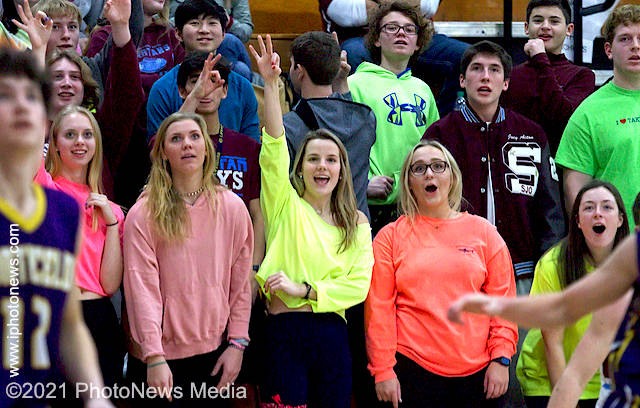
Members of the Maroon Platoon student fan section (left to right in the front) Stephanie Trame, Bailey Dowling, Jenna Albrecht, Lindsey Aden and Katelyn Berry along with Joey Acton and Blake Dable in the row behind them, wait for a Ty Pence ball to find net during St. Joseph-Ogden's home basketball game against Monticello. The Spartans avoided a conference loss, defeating the Sages, 57-52. Pence (not pictured) scored 25 points in victory.

Photo: PhotoNews Media/Clark Brooks


Photo of the day: January 12, 2021


Blake Franklin dribbles the soccer ball down the field.
Unity falls in soccer season opener
Rockets' Blake Franklin concentrates on dribbling the ball down the field during Unity's home match against St. Teresa on August 21, 2007. The Rockets fell by way of a 3-0 decision in their season home opener Tuesday afternoon to the visiting Bulldogs.
Photo: PhotoNews/Clark Brooks

166 make 2nd quarter High Honor Roll at SJO


Yesterday, St. Joseph-Ogden High School announced the school's second quarter honor roll receipents. This quarter, 166 students earned High Honor Roll recognition for their academic efforts. Forty-five students in both the sophomore and junior classes secured a GPA above the requisite 3.74.

An additional 77 students who earned grade point average of 3.25 or higher on the school's 4.0 scale also made the honor roll.

High Honor Roll

Freshmen

Sophomores

Juniors

Senior

Honor Roll

Freshmen

Sophomores

Juniors

Seniors


Over 180 students at Unity Junior High make Honor Roll


Seventy-nine students at Unity Junior High School earned High Honor Roll recognition for their academic performance during the second quarter of the 2020-21 school year. Meanwhile, the school administration announced another 108 students across the same three grade levels to achieve Honor Roll status.

Sixth Grade
High Honor Roll
Dominic Russell Baxley
Alex Martin Bromley
Berkley Jane Cloud
Caleb Benjamin Coy
Hudson Lee DeHart
Danika Ann Eisenmenger
Allison Renee Fenter
Bailee Mae Gadeken
Colton Ray Harmon
Kathryn Clara Knoll
Carson Wesley McCune
Landrey Michelle Mohr
Brooklyn Marie Mumm
Adam Lucas Reedy
Max Warren Rossi
Allyson Lynn Shaw
Isaac Benjamin Siegwald
Evalyn Alexandra Skibbe
Piper Estelle Staley
Grace Lynne Tempel
Jacob Michael Ward
Leah Marianne Watson
Elizabeth Johnna Wayne
Rylan Kade Wolf
Kendal Lea Zerrusen

Honor Roll

Andrew David Berkey
Grace Michele Bickers
Paige Nicole Bradley
Clare Faustina Bryant
Brody Ray Butler
Cadence Marie Chandler
Addison Tyler Davis
Aidan Dean Ellis
Reese Bella Frye
Journey Maddison Gabbard
Keegan Patrick Germano
Olivia Ashlyn Hall
Walker Dale Hall
Dustin Rose Harris
Broderick Wayne Irwin
Avery Nicole Kamradt
Rush Matthew Little
Cash Cohen McCann
Audrey Claire McDaniel
Sadie Jane Polonus
Evan Alexander Puckett
Skylar Osheania Sanders
Ethan Daniel Schaefer
Lane Edward Sexton
Alyssa Renae Shields
Jackson Leo Smith
Madison Amanda Spohn
Baileigh Marie Thomas
Grace Ann Wherley
Kendall Grace Wysong
Joel Mitchell Yergler

Seventh Grade
High Honor Roll
Anna Carolyn Amias
Cameryn Dayle Cobb
Eli Samson Crowe
Ella Jean Darnall
Callie Marie Ellars
Camden Michael Fairbanks
Margaret Rose Garcier
Isabel Grace Grob
Caden Maddox Hensch
Miles Kennedy Johnson
Mylie Emily Margaret Loftsgaard
Claire Lynn Meharry
Mason Robert ONeill
Harry Matthew Polonus
Ty Steven Rodems
Theda Marva Roether
Katie Marie Ruggieri
Vanna Lee Schriefer
Hunter James Shike
Annalise Rose Shunk
Caden Alexander Stierwalt
Ginna Mae Stierwalt
Madelyn Rose Stierwalt
Emma Marie Swisher
Paula Louise Wilson

Honor Roll

Aria Eve Battaglia
Crewe William Gene Eckstein
Olivia Breann Egelston
Dane Robert Eisenmenger
Collin William Graven
Kenley Jo Harris
Brooke Autumn Hartman
Joshua Todd Heath
Brayden Jonathon Henry
Tyler Jason Henry
Sophia Katherine Hewerdine
Lucas Alexander Hood
Logan Phillip Jeurissen
Faith Lyn Lampe
Johanna Ilene Langley
Isabelle Joy Levingston
Maxwell Cort McCabe
Deakin Frederick Moore
Isaac Julian Neverman
Dallas Jordan Porter
Mackenzie Rose Pound
Olivia Grace Rawdin
Kyla Lanae Reed
Jillian Brooke Schlittler
Liana Grace Sheets
Shelby Lynn Smith
Lauren Patricia Stratton
Ian John Taber
Sophia Louise Jean Toney
Alexander Lane Wells
Claire Morgan Zorns

Eighth Grade
High Honor Roll
Jenna Blair Adams
Avery Jean Alagna
Lindy Marie Bates
Molly Kay Baxley
Paige Leeanne Brewer
Noah Michael Bryant
Elle Makenna Cheely
Josephine Rose Cler
Madelyn Rae Darnall
Jordan Kathryn Daugherty
Ashlyn Brielle Denney
Kade Ryan Dubson
Ava Maureen Fenter
Catharine Elizabeth Ford
Sophia Safrona Frye
Sophia Ruth Hartke
Lauren Mellissa Hellmer
Dallas Anthony Hollingsworth
Alex Nathaniel Mowrer
Brady James Parr
Camryn Elizabeth Reedy
Ashley Lynn Rennels
Lydia Claire Rossi
Maegan Denise Rothe
Savannah Renee Rubin
Lauren Anne Shaw
Joseph Robert Tempel
Avery Elise Watson
McKinley Mae Weller

Honor Roll

Elizabeth Marie Anderson
Emmerson Matthew Bailey
Sophia Cathryn Beckett
Kolton Andrew Black
Michael Allan Bromley
Dakota Michael Brown-McClain
Bentten Matthew Cain
Logan Reid Church
Jacob Ivan Davidson
Ava Jane Davis
Ezekiel De Los Santos
Nathaniel Gojam DeNeal
Chloey Ryanne Duitsman
Piper Ann Farney
Paige Ann Garretson
Kadence Lynn Goff
Faith Marianne Hall
Caleb James Hoewing
Wyatt Matthew Huffstutler
Sydney Marie Jackson
Andrew Jason King
Elias Anthony Eugene Lawlyes
Kaitlynn Christine McEvoy
Avery Jarrod McGraw
Gracie Marie Meharry
Maliyah Marie Ortiz
Reigna Jolie Price
Taylor Aiyana Marie Prough
Oliver Mason Hyeok Joon Rawlings
Korben Dale Ray
Nolan Scott Remole
Garrett Francis Richardson
Ryan Benjamin Rink
Ryan James Robinson
Braden Allen Roderick
Brock Jacob Schlittler
Abigail Ruth Smith
Daniel Christopher Stein
Grant James Steinman
Owen Michael Taylor
Jacob Howell Thomas
Gavin Henry David Weaver
Jordan Jeanne Whittington
Tessah Rae Williams
Lauren Anne Williams-Scroggins
Nolan Allen Wishall

Village Crier: January 11, 2021


Number of COVID cases on the rise

The number of confirmed cases of the Coronavirus is taking a steep climb this week with 65 new cases identified in the past four days. The rise comes during the projected incubation period predicted by epidemiologists and just a week before Region 6 could possibly bounce back to Tier 2 mitigation and less stringent restrictions.

There are now 97 active cases within the six villages, a level that hasn't been seen since December 1 and the highest level this calendar year. Just six days earlier, The Sentinel area enjoyed its lowest number of positive cases for nearly a five week period.


SJO grad joins real estate firm

Zac White, a graduate from St. Joseph-Ogden High School, has joined The Littlefield Group. Over the past 22 years, The Littlefield Homes has assisted thousands of families buy and sell homes as well as investors interested in commercial property and farm land. White, a Champaign County native received his Bachelors Degree at Western Illinois University. White, a licensed agent and broker, he can be reached at (217) 841-9296 or by email at Zac@littlefieldhomes.com.


Lots on for tomorrow's board meeting

In addition to approving invoices for payment and changes to how St. Joseph invests village funds, The St. Joseph Village Board will vote on resolution to approve the Champaign County Multi-Jurisdictional Hazard Mitigation Plan (CCHMP).

The plan calls for identifying and prioritizing community policies, "actions and tools to implement in order to reduce potential risk and potential for future losses associated with the occurrence of selected natural and technical hazards. The goal is to use the plan to prepare for natural and technical hazards. A draft copy of the plan is available online.

The CCHMP meets the requirements of the Disaster Mitigation Act of 2000, which includes planning objectives established by FEMA, inter-agency coordination as well as coordination of local mitigation planning with the state. Susan Monte, planner from Champaign County Regional Planning Commission will discuss the updated version of the plan.

The board will also take a vote on a Moter Fuel Ordinance and a resolution to wave subdivision regulations in a matter between Rudisill Trust and Arcadia Farms.


Guest Comment: Put away your guns, pipe bombs and hatred


by Glenn Mollette, Guest Commentator


Acts of violence against a marriage partner have never saved a marriage. Violent acts toward family members have never made a family happier. Typically, they create emotional and sometimes physical wounds that are never forgotten. Too many families have suffered because someone in the family became violent.

Violence in our communities and towns always results in pain, division and sometimes even loss of life. Violence typically brings the wrong people together to do bad things. No community, city or state needs this.


The destruction of buildings and businesses are acts of violence and are criminal.
In times of war or enemy aggression against our United States, violence has been necessary. Acts of war have never been pleasant. They result in the loss of life and horrific debilitation of so many people physically and mentally. Most Americans do not want to be at war with anyone.

In years past, we have had to protect our country against those who sought to harm us. The Second Amendment gives Americans the right to bear arms and protect ourselves. We are grateful for our military but we pray for peace. None of us want our family members actively involved in combat if it can be avoided.

Violence like we saw last week at the United States Capitol was criminal. It helped no one. It solved nothing. Everyone who traveled to hear President Trump speak should have bought a nice dinner in D.C. and then traveled back to their families. Unlawfully entering the Capitol was wrong and was carried out in a violent criminal way. People were killed. Offices were torn apart and doors broken down. Staffers were terrified for their lives. This should never have happened. Many of these criminals will eventually be arrested and spend time in jail.

This act of criminal stupidity did nothing to advance or help President Trump. If they had stopped in front of the Capitol and given speeches, yelled, screamed, waved their signs throughout the day and then gone home the results would have been better. Terrorism never produces positive results. Destruction of the property of others and the terrorism of people are savage and criminal.

This same kind of unnecessary violence was seen in many of our cities last summer. I traveled to Cleveland, Ohio after a march had taken place and saw the results of acts of violence. I saw almost all of downtown Cleveland boarded up. Businesses were closed. Hotels were closed. Very few restaurants were open. For weeks my family was afraid to stop in downtown Louisville because of the protests and disruption occurring in the city.

In the United States of America, individuals, groups and organizations have the absolute right to march, protest and exercise their free speech. However, the destruction of buildings and businesses are acts of violence and are criminal. The people who shut down sections of cities throughout our country should be arrested for their behavior. An acquaintance, who lived outside Seattle for many years, was terrified to travel back to that city last year.

Violence against Democrats or Republicans will not bring this country back together. Invasion and violence against the Capitol solved nothing but ruined some lives. Violence will not change the results of the election. Joe Biden will be the President of the United States for the next four years.

March, protest, yell, scream and financially support organizations who promote your point of view. But please, put your guns, pipe bombs and hatred away.

-----------------------------------------------------------

Dr. Glenn Mollette is a syndicated American columnist and author of American Issues, Every American Has An Opinion and ten other books. He is read in all 50 states. The views expressed are those of the author and are not necessarily representative of any other group or organization.

-----------------------------------------------------------

This article is the sole opinions of the author and does not necessarily reflect the views of The Sentinel. We welcome comments and views from our readers.


-----------------------------------------------------------


Guest Comment: Judicial overreach is a Pandora’s box of government encroachment


by Howard C. Self, President
Right To Believe

As 2020 is drawing to a close, we all hope that we are seeing the light at the end of the tunnel in this year of the pandemic. The advent of vaccines is hopeful, yet the United States and other nations face a third wave of COVID infections. And as municipal and state governments impose new restrictions, there is growing concern about impacts on individual liberty and religious freedom.

In a recent speech to the Federalist Society, Supreme Court Justice Samuel Alito said, “We have never before seen restrictions as severe, extensive and prolonged as those experienced for most of 2020… the COVID crisis has served as a sort of constitutional stress test. And in doing so it has highlighted disturbing trends that were already present before the virus struck.” Alito went on to cite numerous court cases impacting the free exercise of religion as indicative that “religious liberty is in danger of becoming a second-class right.”

Last month, the Supreme Court sided with the Catholic Diocese of Brooklyn and an Orthodox Jewish congregation. In a 5-4 decision, the court ruled that New York could not restrict religious gatherings more than others. In the opinion, Associate Justice Neil Gorsuch wrote, “There is no world in which the Constitution tolerates color-coded executive edicts that reopen liquor stores and bike shops but shutter churches, synagogues, and mosques.”

In a similar case resolved just last week, the Catholic Archdiocese of Washington, D.C., filed a suit in federal court against Mayor Muriel Bowser. The mayor had imposed a numeric limit of 50 on religious gatherings, no matter the size of the facility, whereas businesses were limited to a percentage of capacity. Fortunately, the city reneged and issued an amended order that treats religious congregations the same as other entities. But it took a lawsuit to get there.

The disturbing trends referenced by Alito are all too familiar to religious leaders, many of whom are alarmed by growing bias and overreach by government officials and the courts, and concerned about protecting their rights to the free exercise of their faiths. Another example of this concern is a case before the District of Columbia Superior Court. Earlier this month, Judge Jennifer M. Anderson issued a “remedies judgment” in the controversial Family Federation for World Peace and Unification International et al v. Hyun Jin Moon et al case, which totally disregards the defendants’ First Amendment rights and due process. The case is sure to be continued through the appeals process.

This case before the D.C. Superior Court involves protracted disputes within the Unification Movement founded by the late Rev. Sun Myung Moon. Though it was initially and properly dismissed on First Amendment grounds because it clearly involved religious disputes in which courts cannot intervene, this complex and extremely costly case has been extended by subsequent rulings for more than nine years.

It is well-established legal precedent that the First Amendment prohibits the courts from interfering in disputes about the teachings and leadership of religious groups. Yet that is precisely what the D.C. court has done in this case. As evident in both summary judgment and remedies rulings, the court disregarded voluminous evidence of an emerging religious movement wrestling with issues of succession and doctrine. It decided that it could sidestep First Amendment prohibitions and evaluate the religious purposes of UCI, a D.C. non-profit corporation established to advance the principles and work of the Unification movement. In doing so, the court in effect took sides in a religious schism.

The onerous actions taken by the D.C. court in its remedies ruling of Dec. 4 are cause for great alarm among religious and nonprofit leaders alike. Based on its unconstitutional evaluation of UCI’s religious purposes, the court found that four directors had breached their fiduciary duty, ordered them removed from the board, and made them personally responsible for crushing financial penalties. This severe judgment was imposed even though in its ruling, the court acknowledged that the four directors had not received any personal benefit.

So why does this matter? The D.C. Superior Court’s rulings in this case have trampled upon First Amendment protections, making determinations about religious teachings and leadership, and thereby taking sides in a schism. Such dangerous precedents make all religious groups more vulnerable to government intrusion. The court took the unprecedented step of removing a majority of the directors of this nonprofit’s board, seriously overstepping its authority and disregarding requirements specifically articulated in D.C. law. Board members of every nonprofit incorporated in the District of Columbia should be alarmed about the details of this case, for there could be dire extralegal ramifications should they face any disputes before the D.C. court.

It should also concern people of all faiths that the courts are often all too ready to use such cases as opportunities to expand their powers and authority. Judicial overreach opens a Pandora’s box of government encroachment into religious expression and free exercise. It can, and often does, lead to protracted legal battles; distracting religious organizations and nonprofits from their primary missions; and forcing them to bear heavy costs to defend themselves.

If judges can decide what aspects of your faith are valid, or what is not in the public interest, the implications for religious freedom are vast. It opens the door for government, not God, to be the final arbiter of the human conscience.

Commenting on such current challenges to religious freedom, Bishop Paul Murray, chairman of the Religious Freedom Commission of One Way Churches International, noted, "Judicial overreach is a growing concern for faith leaders of all backgrounds. Freedom of religion, belief and conscience is our first and most fundamental right. Rulings like the ones in this case remind us that we must be vigilant and stand together to safeguard the First Amendment rights of all."


Howard C. Self is the president of Right To Believe, a not-for-profit organization fighting to protect religious rights from undue governmental interference. He has also held leadership roles at the Family Peace Association and in the Unification Movement, which are affiliated with UCI, the ultimate holding company that owns United Press International. -----------------------------------------------------------

This article is the sole opinions of the author and does not necessarily reflect the views of The Sentinel. We welcome comments and views from our readers.


-----------------------------------------------------------

Photo of the Day - January 9, 2021


Two to the finish
Running along side his daughter Katie Duval, Doug Weaver keeps a steady pace to a first place finish in the Male 60 and Over division at the 2019 SJO 5K. He finished in 59th place overall with a time of 24:21.30. Just under 200 runners competed at this year's race. Proceeds are donated to the St. Joseph Middle School and St. Joseph-Ogden cross country and track programs. Clocking in second place in the Female 30 to 34 division, Duval finished in 58th place overall with a time of 24:21.10.

(Photo: PhotoNews Media/Clark Brooks)

Photo of the Day - January 8, 2021


Kennedi Burnett

SJO rally seals conference win

Sophomore outside hitter Kennedi Burnett passes the ball to the front row during St. Joseph-Ogden's road game against Unity on October 8 in 2019. After dropping the first set 28-26, the Spartans rallied back in the Illini Pairie Conference match to take the last two, 25-20, 25-13 at the Rocket Center. Photo: PhotoNews Media/Clark Brooks

Editorial: If walks like a duck and quacks like one


Sentinel editorial At a rally Tuesday in front of the U.S. Capitol, newly elected U.S. Rep. Mary Miller, R-Oakland said, "Hitler was right on one thing; he said, ‘Whoever has the youth has the future.’"

Bitte, warte eine Minute! Hold up a sec lady.

Was hast du gesagt Frau Miller?

Straight out of central Illinois and right into a pan of pan of hot political Crisco, the newly sworn-in Illinois lawmaker is getting her first rude, booty-hurt lesson of American stateswomanship: Every. Freakin'. Word. Counts.

After considerable backlash, some calling for her resignation - which won't happen - and rebuke from politicians around the state, including Rodney Davis, R-Taylorville, Miller issued this statement this morning:

"Earlier this week, I spoke to a group of mothers about the importance of faith and guarding our youth from destructive influences. I sincerely apologize for any harm my words caused and regret using a reference to one of the most evil dictators in history to illustrate the dangers that outside influences can have on our youth. This dark history should never be repeated and parents should be proactive to instill what is good, true, right, and noble into their children’s hearts and minds. While some are trying to intentionally twist my words to mean something antithetical to my beliefs, let me be clear: I’m passionately pro-Israel and I will always be a strong advocate and ally of the Jewish community. I’ve been in discussion with Jewish leaders across the country and am grateful to them for their kindness and forthrightness."

From my perspective she has three problems.

First, Miller did not apologize for using the quote, but merely that her message was misinterpreted by some and then proceeds to the highly ineffective, it rarely works 'twist my words' defense.

She was not least bit contrite, admitting that it was wrong, unthinkable to have considered in retrospect using the quote in the first place. Her apology comes across with the same sincerity of a 12 year-old, who after returning container back in the freezer, caught minutes after devouring the last of Haagen-Dazs and with a smile still on their lips.

Second, she said, "I’m passionately pro-Israel and I will always be a strong advocate and ally of the Jewish community." Not one person pro-Israel, Jewish or not, would even REMOTELY consider using a quote from Hitler in political rally to support an ideal or public policy.

Finally, and most troubling point to note is in her speech she said Adolf Hitler was "right on one thing". Let's be clear, she did not say 'The only thing ...', which might have given her a bit of slack to play with if she had immediately apologized for the remark instead of waiting three days. The rub is this: If we believe someone is right on one thing, then usually we will find something else we agree with, and then another idea and another point and a ....

Miller is new on the job and we can only hope she does not repeat history yet again by quoting Adolf Hitler or any other fanatic of fascism, hate and universal evil.

Words. Freakin'. Matter. All of them.


Village Crier: January 6, 2021


Village community garage sale date set for April

With warmer weather still months away, the first date for community garage and yard sales is on the books. The St. Joseph Community Garage Sale will take place on April 8 - 10.


Billy Bob's settles case with the county

On New Year's Eve, Billy Bob's was issued a temporary restraining order by Judge Roger Webber for operating without a valid health permit. To avoid further unnecessary litigation, the Ogden eating establishment signed off on a settlement agreement with county public health agency on Tuesday to remain open for scaled back business operations.

After paying $50 reinstatement fee for their health permit and submitting to an inspection, starting Friday the restaurant under the water tower will be open for carryout service only. The establishment posted on Facebook their new hours for service will be Sunday thru Wednesday from 11a to 7p and Thursday thru Saturday from 11a-8p.

The settlement also included a provision that Billy Bob's submit a written plan detailing its plans to operate under current county ordinance and state COVID-19 mitigation restrictions.

Health authorities suspended the permit on December 11 for continuing indoor service for remaining open in defiance of the state mandated mitigation plan which forbid indoor dining. Billy Bob's continued to operate without a valid health permit before receiving court summons.

For more information on carryout service call (217) 582-2277.


St. Joseph youth baseball registration opens next week

Player registration for the St. Joseph Youth Baseball Little League opens on Saturday, January 23. Eligible players have until February 6 to sign up. A birthday chart to help determine which level a child will play can be found here.


Tolono studio photographer offers mini sessions

Give that special someone in your life a photo on Valentine's Day. Photographer Madeline Wilson is offering Valentine's Day mini sessions with families, kids, couples and/or pets in her studio located at 104 Main Street in Tolono. Sessions will begin on January 31 and run through February 14.

For more information visit Wilson's Facebook business page or call (217) 621-4159.


Tier 2 on the horizon

Earlier this week Governor J.B. Pritzker said any region below the required metrics can move into Tier 2 restrictions a week from tomorrow on January 15. That is welcomed news for athletes and restaurants in regions around the state, especially those that have done well at slowing the spread of the COVID-19 pathogen.

"We are watching closely in this incubation period post-Christmas and New Year’s. I am cautiously optimistic as there are some early signs that some regions have made real progress," Pritzker announced during an afternoon press briefing. The news comes after he extended the emergency COVID restriction Monday, requiring people to wear a mask for another 150 days.

In order for a region to move back to Tier 2 mitigations, a region must experience less than 12 percent test positivity rate for three consecutive days, have more than 20 percent available intensive care unit (ICU) hospital bed availability and have declining COVID hospitalizations in 7 of the last 10 days. The Governor's team is waiting to see if there is a surge or spike of COVID-19 cases seeded from New Year's gatherings.

Locally there have seventeen new case identified in the past 48 hours. The Sentinel area saw the lowest number of active cases in over 51 days on Tuesday with 59. The number of infections have climbed to 71 likely from New Year's Eve revelry.

As of Wednesday night, 3,921 patients in Illinois were reported to be in the hospital with COVID-19. According state records, 783 of those patients were in the ICU and 450 patients on ventilators.


The Sentinel will help promote your business

If you own and operate a business located in Tolono, Sidney, Philo, Ogden, St. Joseph or Royal, fill out the form below to list your business or the services you offer in The Sentinel Business Directory. To list your business' contact information complete the online form here...


Send your business, social or community organization's press release or event information to The Sentinel at editor@oursentinel.com.


Photo of the Day - January 7, 2021


SJO dominates IVC

Lineman Cole Zaccarelli takes a much-earned drink on the sidelines during St. Joseph-Ogden's home football game against Illinois Valley Central on October 6, 2017. The Grey Ghost fell 38-20 thanks to dominating play on both sides of the ball by the Spartans.


Photo of the Day - January 5, 2021


Dani Gooch and Kylie Holland

Rockets, Spartans tangle on the hardwood

Rockets' Dani Gooch [left] and Spartans' Kylie Holland [right] battle for a loose ball during second half action of the SJO girl's basketball team's home game on November 27, 2007. St. Joseph-Ogden battled to a 54-47 finish over Unity to improved to 5-0 on the season. (Photo: PhotoNews Media/Clark Brooks)

Loading latest story ...


| Most recent articles

Loading recent stories ...


| Home Improvement

Loading recent stories ...


| Opinions

Loading recent stories ...


More Sentinel Stories