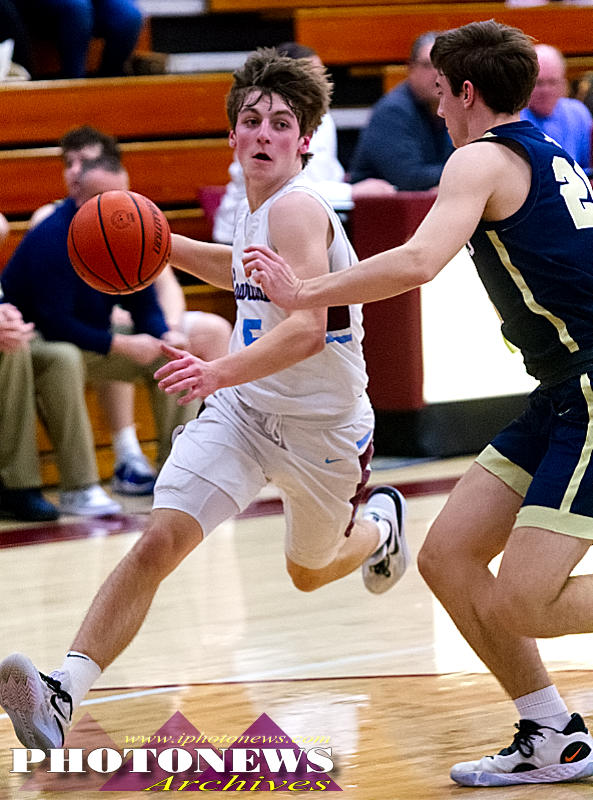
Photo: PhotoNews Media/Clark Brooks
Photo Gallery | Pence scores 41, Spartans grab conference win from BCC
Photo: PhotoNews Media/Clark Brooks
Millions of low-income Americans to lose Medicaid coverage as Covid-era restrictions come to an end
Kaiser Health News
The upheaval, which begins in April, will put millions of low-income Americans at risk of losing health coverage, threatening their access to care and potentially exposing them to large medical bills.
It will also put pressure on the finances of hospitals, doctors, and others relying on payments from Medicaid, a state-federal program that covers lower-income people and people with disabilities.
Almost three years ago, as covid sent the economy into free fall, the federal government agreed to send billions of dollars in extra Medicaid funding to states on the condition that they stop dropping people from their rolls.
But legislation enacted in December will be phasing out that money over the next year and calls for states to resume cutting off from Medicaid people who no longer qualify.
Now, states face steep challenges: making sure they don’t disenroll people who are still entitled to Medicaid and connecting the rest to other sources of coverage.
Even before the pandemic, states struggled to stay in contact with Medicaid recipients, who in some cases lack a stable address or internet service, do not speak English, or don’t prioritize health insurance over more pressing needs.
“We have no illusion that this will be beautiful or graceful, but we will be doing everything we can not to lose anyone in the process,” Dana Hittle, Oregon’s interim Medicaid director, said of the so-called Medicaid unwinding.
With the rate of uninsured Americans at an all-time low, 8%, the course reversal will be painful.
The Biden administration has predicted that 15 million people — 17% of enrollees — will lose coverage through Medicaid or CHIP, the closely related Children’s Health Insurance Program, as the programs return to normal operations. While many of the 15 million will fall off because they no longer qualify, nearly half will be dropped for procedural reasons, such as failing to respond to requests for updated personal information, a federal report said.
Certain states may be hit particularly hard: Nevada’s enrollment in Medicaid and CHIP has risen 47% since February 2020. Many signed up toward the start of the pandemic, when the state’s unemployment rate spiked to nearly 30%.
Ordinarily, people move in and out of Medicaid all the time. States, which have significant flexibility in how they run their Medicaid programs, typically experience significant “churn” as people’s incomes change and they gain or lose eligibility.
The unwinding will play out over more than a year.
People who lose Medicaid coverage — in the more than 30 states covered by the federal marketplace — will have until July 31, 2024, to sign up for ACA coverage, CMS announced on Jan. 27. It’s unclear whether the state-based marketplaces will offer the same extended open-enrollment period.
Even states that are taking far-reaching action to make sure people don’t end up uninsured worry the transition will be rough.
In California alone, the state government forecasts that at least 2 million people out of 15 million in the program today will lose Medicaid coverage because of loss of eligibility or failure to reenroll.
“We acknowledge that this is going to be a bumpy road,” California Health and Human Services Secretary Mark Ghaly said. “We’re doing all we can to be prepared.”
In an all-hands-on-deck effort, states are enlisting Medicaid health plans, doctors, hospitals, state insurance marketplaces, and an assortment of nonprofit groups, including schools and churches, to reach out to people at risk of losing coverage.
States will also use social media, television, radio, and billboards, as well as websites and mobile phone apps, to connect with enrollees. That’s in addition to letters and emails.
Nevada has developed a mobile app to communicate with members, but only 15,000 of its 900,000 Medicaid enrollees have signed up so far.
“[T]he transient nature of Nevada’s population means that maintaining proper contact information has been difficult,” a state report said in November. At least 1 in 4 letters sent to enrollees were returned on account of a wrong address.
The law that allows states to begin disenrolling ineligible Medicaid recipients on April 1 bars states from disenrolling anyone because mail was returned as undeliverable until the state has made a “good faith effort” to contact the person at least one other way, such as by phone or email.
To further reduce disruption, the law requires states to cover children in Medicaid and CHIP for 12 months regardless of changes in circumstances, but that provision doesn’t take effect for almost a year.
States will give Medicaid recipients at least 60 days to respond to requests for information before dropping them, said Jack Rollins, director of federal policy at the National Association of Medicaid Directors.
States will use government databases such as those from the IRS and Social Security Administration to check enrollees’ income eligibility so they can renew some people’s coverage automatically without having to contact them. But some states aren’t taking full advantage of the databases.
States have until February to submit their unwinding plans to the federal Centers for Medicare & Medicaid Services, which will monitor the process.
But it is already clear that some states are doing much more than others to keep people insured.
Oregon plans to allow children to stay on Medicaid until age 6 and allow everyone else up to two years of eligibility regardless of changes in income and without having to reapply. No other state provides more than one year of guaranteed eligibility.
Oregon is also creating a subsidized health plan that would cover anyone who no longer qualifies for Medicaid but has an annual income below 200% of the federal poverty level, which amounts to about $29,000 for an individual, state officials said. The program will have benefits similar to Medicaid’s at little or no cost to enrollees.
Rhode Island will automatically move people who are no longer eligible for Medicaid — and with annual incomes below 200% of the poverty rate — into an Affordable Care Act plan and pay their first two months of premiums. State officials hope the shift will be seamless for many enrollees because they’ll be moving between health plans run by the same company.
California will move some people to a subsidized private plan on the state’s marketplace, Covered California. Enrollees will have to agree and pay a premium if they don’t qualify for a free plan. However, the premium could be as low as $10 a month, said Jessica Altman, executive director of Covered California. (Altman’s father, Drew Altman, is president and CEO of KFF. KHN is an editorially independent program of KFF.)
“We want to make it easier to say yes to coverage,” Altman said.
But experts worry about what will become of Florida Medicaid enrollees.
Florida doesn’t have its own ACA marketplace. As in most states, its residents use the federal exchange to shop for ACA plans. As a result, the handoff of people from Medicaid to marketplace may not be as efficient as it would be if it involved two state agencies that regularly work together, said Jodi Ray, director of Florida Covering Kids and Families, a nonprofit that helps people find coverage.
Another concern for advocates is that Florida makes less use of government databases than other states to check enrollees’ incomes. “We make everyone jump through hoops to get reenrolled instead of utilizing all the acceptable data,” Ray said.
Florida typically takes weeks to process Medicaid applications, while some states do it in a day, she said.
Florida’s unwinding plan illustrates the difficulty of reaching enrollees. The plan said that, since 2020, the state has identified 850,000 cases in which Medicaid recipients did not respond to requests for information.
Florida Medicaid officials did not return calls for comment.
While state officials struggle to manage the unwinding, health care providers are bracing for the fallout.
Dennis Sulser, chief executive of Billings, Montana-based Youth Dynamics, which provides mental health services to many children on Medicaid, expects some will lose coverage because they get lost in the process.
That could leave patients unable to pay and the nonprofit financially stretching to try to avoid children facing an interruption in treatment.
“If we had to discharge a child who is in our group home care, and they're only halfway through it and don't have all of the fundamentals of the care support needed, that could be tragic,” Sulser said.
KHN correspondents Daniel Chang in Hollywood, Florida; Angela Hart in Sacramento, California; Katheryn Houghton in Missoula, Montana; Bram Sable-Smith in St. Louis; and Sam Whitehead in Atlanta contributed to this report.
KHN (Kaiser Health News) is a national newsroom that produces in-depth journalism about health issues. Together with Policy Analysis and Polling, KHN is one of the three major operating programs at KFF (Kaiser Family Foundation). KFF is an endowed nonprofit organization providing information on health issues to the nation.Share Valentine's Day treats with the flavor of love
Topped with a red bow for a final touch, the Ethel M Chocolates 5-piece Love Collection features a series of heart-shaped, premium chocolates nestled in an elegant box. The sampler features popular selections including Milk Chocolate, Lemon Satin Crème, Dark Chocolate, Milk Chocolate Peanut Butter and White Chocolate. This sweet collection of handcrafted chocolate is a decadent way to show how much you care. It's ideal as a thoughtful gesture of appreciation for friends and family, or for a more romantic connection, it's the perfect item to pair with jewelry or flowers to surprise your loved one. Heartfelt Appreciation
If your gift list includes chocolate aficionados, there's no better way to speak straight to their heart than the Ethel M Chocolates 28-piece Large Heart Gift Box. This popular seasonal assortment showcases an expanded selection of mouthwatering, handcrafted, premium chocolates. The collection includes an array of flavors, from Dark Chocolate Sea-Salt Caramel and Milk Chocolate Raspberry Satin Crème to Milk Chocolate Almond Butter Krisp and Milk Chocolate Pecan Toffee Crisp. The gourmet variety is sure to delight, and the large satin-wrapped, heart-shaped box makes your affection deliciously clear. Treat those closest to your heart to a delicious experience and visit EthelM.com to explore more unique gifts this Valentine's Day.
New banking facility opens in St. Joseph
The lobby is now open Monday-Friday 8am - 5pm and on Saturday by appointment. The drive-up hours are Monday-Friday 7am - 6pm and Saturday 8am - 12pm.
In addition to traditional teller operations, the new facility will have safe deposit boxes, drive-up lanes, an ATM and night depository, and a coin machine available to the public.
The loan department will be led by Executive Vice-President and Senior Lender Les Hoveln and Jason Snyder, Vice-President of Lending.
For more information about the bank's services and upcoming "Home Opener", call (217) 469-2100.
Rockettes dynamic routine unable to blast squad into IHSA finals
BLOOMINGTON - Members of the Rockettes Dance Team perform during Friday's preliminary round at the IHSA Competitive Dance State Finals. The Unity squad, which qualified for state at the St. Anthony sectional nearly a week earlier, failed to advance to Saturday's championship round finish 18th out of the 30 best squads in the state. The team missed qualifying for the final round for the fifth time since 2015 by just 4.62 points. See more photos from the team's performance at state here.
St. Joseph-Ogden rolls past St. Thomas More, 59-28
Photo of the Day | January 25, 2023
Spartans dive in to pull off hardcourt upset
ST. JOSEPH - Spartans' Ellie Ward goes after a loose ball with Mattoon's Xylia Greeson during their non-conference game Monday. St. Joseph-Ogden rallied back from a 19-point second-quarter deficit to beat the Green Wave 52-49. With five more contests left in the season, the win extends the team's current win streak to three games.CUPHD offers low-cost radon tests, limited supply available
American Legion to host fish fry benefit for Troop 40
St. Joseph - Tickets are on sale now for three fish frys to raise money for St. Joseph's Boy Scouts.
The American Legion will host the first of three fish frys this Friday, January 27, the next one on February 24, and the final event on March 24.
The $10 meal includes two sides and a drink. Food will be served starting 4:30 pm and continue until 7 pm or until the fish is sold out on all three dates. Advance tickets can be purchased this Wednesday 4:30 to 6:30 pm at the IGA. Meal tickets can also be bought at the door on the day of the fry.
For more information visit the event Facebook page here.
SJO dance team qualifies for state finals, Unity dancers will also be there
Sectional standings 1 Jacksonville 89.20
2 Clinton 82.13
3 Unity 78.08
4 Quincy Notre Dame 77.23
5 Lincoln 74.30
6 St. Joseph-Ogden 73.60
Guest Commentary | We can’t go wrong with good information
We like good news but typically the news is not good. Too often no news is good news. In reality, no news is bad news for us all.
There is lots of recent bad news. A crazed gunman entered a dance hall in Monterey Park, California killing 10 people and wounding many innocent people. A former employee walked into an Evansville, Indiana Walmart and shot an employee in the face in the store breakroom. The shooter was killed by local police. A planned protest in downtown Atlanta turned violent when protestors damaged stores and burned a police car over the weekend.
We did hear astonishing good news from Monterey Park. Brandon Tsay confronted the gunman at a second location where he was about to enter and kill more people. He heroically wrestled the gun away from the killer and pointed it at him causing the gunman to leave the scene. Only God knows how many lives Tsay saved. He is a true hero.
News is always happening nationally, locally and individually to us all. We need the information whether it’s good or bad. We need the national and regional news but the local news is up front and close to us.
For example, all around us we are targets of scams, thieves and prowling bad people. Americans were scammed to the tune 5.8 billion dollars in 2021. (Digital Guardian). We are never beyond being duped. Today, daily text messages, emails, phone calls and mail come to Americans phishing for a sucker who will buy the false story they are telling. They are good at what they do.
My son was away in a foreign country when I was duped out of $350 years ago. The caller was very professional sounding and convincing. I believed that if I did not pay the money owed by my son it would negatively impact his career. This was at the beginning of the telephone scam industry and I paid him the money. Later I realized that I had been scammed.
Years ago, a dear friend received a telephone call from someone posing as an IRS agent. The scammer told the senior adult man that he owed $45,000 in back taxes for various reasons. The friend was about 90 years old and living on a meager retirement income. He didn’t realize he was being scammed, was overwhelmed with anxiety and killed himself.
“At every level of life there is a new devil,” an old friend once said. At every stage of life there are new twists, turns and curves. We are never beyond being informed, learning and developing. Young people make mistakes but so do old people. We often think we’ve lived long enough and know most everything, but we don’t. Most of us have become more aware of this problem but crooks work at catching people off guard and are constantly developing new schemes.
Today, we have search engines and are inundated with news and information. However, we don’t hear all the news nor do we know everything we need to know when we need to know. Often, we learn the hard way. This is why education is expensive. Life experience education is often the most expensive and difficult of all learning processes. Even in life education we learn but we don’t always utilize the life experience very much. Too often we repeat the same mistakes hoping for a different outcome.
We can’t go wrong with good information. This is why you need the publication you are reading. Your local paper and online news sources are crucial to a community’s health and overall well-being. Local newspapers, blogs and online sources tell what is happening in your local town and county. Support this news source with your subscription and advertising needs. County newspapers that have been around for years continue to close. Every week I receive notification of a newspaper printing its final edition and that’s not good news.
Dr. Glenn Mollette is a syndicated American columnist and author of Grandpa's Store, American Issues, and ten other books. He is read in all 50 states. The views expressed are those of the author and are not necessarily representative of any other group or organization.
This article is the sole opinions of the author and does not necessarily reflect the views of The Sentinel. We welcome comments and views from our readers. Submit your letters to the editor or commentary on a current event 24/7 to editor@oursentinel.com.
Photo Gallery | Spartans notch win #18 to finish the season above .500
PhotoNews Media/Clark Brooks
Aiden Bell picks up win for Hoopeston at multi-quad wrestling meet
Photo of the Day | January 22, 2023
Cheering for Jones
ST. JOSEPH - St. Joseph-Ogden wrestlers Karleigh Spain and Camden Getty cheer for teammate Quincy Jones after his second-period pin over Hoopeston Area's Nick Brown. Up 7-2 in their 285-pound match, Jones stuck Brown at 2:34 to give the Spartans a 30-6 margin heading into the lighter weight class matches at Saturday's multi-quad meet. SJO went 3-0 on the day to finished their regular season with 18 wins against 16 losses.Photo Gallery | Lightweights lift SJO in home win over Clinton
PhotoNews Media/Clark Brooks
Media/Clark Brooks
PhotoNews Media/Clark Brooks
Emergency assessment needed even when stroke symptoms disappear
Dallas - Stroke symptoms that disappear in under an hour, known as a transient ischemic attack (TIA), need emergency assessment to help prevent a full-blown stroke, according to a new American Heart Association scientific statement published today in the Association’s journal Stroke. The statement offers a standardized approach to evaluating people with suspected TIA, with guidance specifically for hospitals in rural areas that may not have access to advanced imaging or an on-site neurologist.
TIA is a temporary blockage of blood flow to the brain. Each year, about 240,000 people in the U.S. experience a TIA, although this estimate may represent underreporting of TIA because symptoms tend to go away within an hour. While the TIA itself doesn’t cause permanent damage, nearly 1 in 5 of those who have a TIA will have a full-blown stroke within three months after the TIA, almost half of which will happen within two days. For this reason, a TIA is more accurately described as a warning stroke rather than a “mini-stroke,” as it’s often called.
TIA symptoms are the same as stroke symptoms, only temporary. They begin suddenly and may have any or all of these characteristics:
- Symptoms begin strong then fade;
- Symptoms typically last less than an hour;
- Facial droop;
- Weakness on one side of the body;
- Numbness on one side of the body;
- Trouble finding the right words/slurred speech; or
- Dizziness, vision loss or trouble walking.
The F.A.S.T. acronym for stroke symptoms can be used to identify a TIA: F ― Face drooping or numbness; A ― Arm weakness; S ― Speech difficulty; T ― Time to call 9-1-1, even if the symptoms go away.
“Confidently diagnosing a TIA is difficult since most patients are back to normal function by the time they arrive at the emergency room,” said Hardik P. Amin, M.D., chair of the scientific statement writing committee and associate professor of neurology and medical stroke director at Yale New Haven Hospital, St. Raphael Campus in New Haven, Connecticut. “There also is variability across the country in the workup that TIA patients may receive. This may be due to geographic factors, limited resources at health care centers or varying levels of comfort and experience among medical professionals.”
For example, Amin said, “Someone with a TIA who goes to an emergency room with limited resources may not get the same evaluation that they would at a certified stroke center. This statement was written with those emergency room physicians or internists in mind – professionals in resource-limited areas who may not have immediate access to a vascular neurologist and must make challenging evaluation and treatment decisions.”
The statement also includes guidance to help health care professionals tell the difference between a TIA and a “TIA mimic” – a condition that shares some signs with TIA but is due to other medical conditions such as low blood sugar, a seizure or a migraine. Symptoms of a TIA mimic tend to spread to other parts of the body and build in intensity over time.
Who is at risk for a TIA?
People with cardiovascular risk factors, such as high blood pressure, diabetes, obesity, high cholesterol and smoking, are at high risk for stroke and TIA. Other conditions that increase risk of a TIA include peripheral artery disease, atrial fibrillation, obstructive sleep apnea and coronary artery disease. In addition, a person who has had a prior stroke is at high risk for TIA.
Which tests come first once in the emergency room?
After assessing for symptoms and medical history, imaging of the blood vessels in the head and neck is an important first assessment. A non-contrast head CT should be done initially in the emergency department to rule out intracerebral hemorrhage and TIA mimics. CT angiography may be done as well to look for signs of narrowing in the arteries leading to the brain. Nearly half of people with TIA symptoms have narrowing of the large arteries that lead to the brain.
A magnetic resonance imaging (MRI) scan is the preferred way to rule out brain injury (i.e., a stroke), ideally done within 24 hours of when symptoms began. About 40% of patients presenting in the ER with TIA symptoms will actually be diagnosed with a stroke based on MRI results. Some emergency rooms may not have access to an MRI scanner, and they may admit the patient to the hospital for MRI or transfer them to a center with rapid access to one.
Blood work should be completed in the emergency department to rule out other conditions that may cause TIA-like symptoms, such as low blood sugar or infection, and to check for cardiovascular risk factors like diabetes and high cholesterol.
Once TIA is diagnosed, a cardiac work-up is advised due to the potential for heart-related factors to cause a TIA. Ideally, this assessment is done in the emergency department, however, it could be coordinated as a follow-up visit with the appropriate specialist, preferably within a week of having a TIA. An electrocardiogram to assess heart rhythm is suggested to screen for atrial fibrillation, which is detected in up to 7% of people with a stroke or TIA. The American Heart Association recommends that long-term heart monitoring within six months of a TIA is reasonable if the initial evaluation suggests a heart rhythm-related issue as the cause of a TIA or stroke.
Early neurology consultation, either in-person or via telemedicine, is associated with lower death rates after a TIA. If consultation isn’t possible during the emergency visit, the statement suggests following up with a neurologist ideally within 48 hours but not longer than one week after a TIA, given the high risk of stroke in the days after a TIA. The statement cites research that about 43% of people who had an ischemic stroke (caused by a blood clot) had a TIA within the week before their stroke.
Assessing stroke risk after TIA
A rapid way to assess a patient’s risk of future stroke after TIA is the 7-point ABCD2 score, which stratifies patients into low, medium and high risk based on Age, Blood pressure, Clinical features (symptoms), Duration of symptoms (less than or greater than 60 minutes) and Diabetes. A score of 0-3 indicates low risk, 4-5 is moderate risk and 6-7 is high risk. Patients with moderate to high ABCD2 scores may be considered for hospitalization.
Collaboration among emergency room professionals, neurologists and primary care professionals is critical to ensure the patient receives a comprehensive evaluation and a well-communicated outpatient plan for future stroke prevention at discharge.
“Incorporating these steps for people with suspected TIA may help identify which patients would benefit from hospital admission, versus those who might be safely discharged from the emergency room with close follow-up,” Amin said. “This guidance empowers physicians at both rural and urban academic settings with information to help reduce the risk of future stroke.”
Unity 2022-23 First Semester Honor Roll Announced
Senior High Honor Roll
Roger Holben Jr.
Kiersten Reasor
Lillian Montgomery
Sona Khasikyan
Jayci McGraw
Kayla Nelson
Luke Williamson
Madison Loftsgaard
Kara Young
Ellen Ping
Matthew Brown
Rachel Aders
Caleb Amias
Aidan Anderson
Emmalee Atkins
Calvin Baxley
Bettie Branson
Mary Bryant
Annah Cloin
Jared Cross
Jordan Cross
Easton Cunningham
Brendan Graven
Asa Kuhns
Fenley Lopez
Andrew Manrique
Jacob Maxwell
Jolie Meyer
Lauren Miller
Dylan Moore
Abigail Pieczynski
Julia Ping
Sarah Rink
Kaitlyn Schweighart
Tsihon Shotton, Raena Stierwalt
Sophia Stierwalt
Emma Stratton
Ava Vasey
Senior Honor Roll
Maddisen McConaha
Brandon Goyne
Lauren Cooke
Joshua Davidson
Myles Good
Mason Haas
Matea Cunningham
Hayleigh Clemmons
Tyler Liffick Worrell
Avery White
Hunter Duncan
Mason Perry
Emmillia Tiemann
Kayle Deck
Ian White
Brynn Clem
Reece Sarver
Natalie Weller
Kayla Daugherty
Anthony Chaney
Cale Rawdin
Annabelle Steg
Maria Buffo
Nicholas Nosler
Haley Carrington
Anna Clark
Paige Farney
Emily Hollett
Zoey Sorensen
Taylor Warfel
Eden Markstahler
Cole Marheine
Logan Allen
Jayden Clem
Anna Hamilton
Audrey Remole
David Baker Jr.
Alivia Renfroe
Andrew Mowrer
Haylen Handal
Junior High Honor Roll
Taylor Drennan
Tatum Meyer
Carson Parker
Briana Ritchie
Brooke Hewing
Lauren Neverman
Rylee Richardson
Analyse Carter
Cassidy Keller
Caelyn Kleparski
Dalton ONeill
Piper Steele
Bridget Vazquez
Breanna Weller
Abigail Woolcott
Keaton Roether
Carsyn Smith
Bailey Wayne
Santiago Sanchez
Madysen York
Rebecca Carter
Emma Fish
Brooklyn Haas
Caroline Jamison
Eden Johnson
Bayleigh Jones
Jocelyn LeFaivre
Reagan Little
Eric Miebach
Anna Polonus
Ava Price
Rosalia Requena Menchon
Isaac Ruggieri
Aubrey Sanders
Olivia Shike
Logan Siuts
Lily Steffens
Brock Suding
Ruby Tarr
Andrew Thomas
Jeremy Wells
Erica Woodard
Junior Honor Roll
Bryson Weaver
Kolten Wells, Anna Wood
Thayden Root
Lynndsay Talbott
Addison Ray
Kamryn Edenburn
Zachary Lorbiecki
Henry Thomas
Dean Niswonger
Gabriel Pound
McKayla Schendel
Sophia Wozencraft
Trevor McCarter
August Niehaus
Nicholas Brown
Natalie Ellars
Emma Plackett
Aubrey Schaefer
Carly Scroggins
Trevor OBryan
Connor Cahill
Bailey Grob
Shelby Hoel
Luna Thomson
Gabriel Carter
Kendra Cromwell
Margaret Ingleman
Meredith Reed
Alexia Vandiver
Emberly Yeazel
Desire De Los Santos
Madison Henry
Aiden Porter
Evelyn Albaugh
Kate Thomas
Sophomore High Honor Roll
Bentten Cain
McKenzie Hart
Brady Parr
Jordan Daugherty
Ava Davis
Reigna Price
Ryan Rink
Ashley Rennels
Catharine Ford
Jenna Adkins
Lindy Bates
Molly Baxley
Sophia Beckett
Paige Brewer
Elle Cheely
Josephine Cler
Madelyn Darnall
Emily Decker
Ashlyn Denney
Estella Dodd
Kade Dubson
Chloey Duitsman
Hunter Eastin
Ava Fenter
Kadence Goff
Faith Hall
Sophia Hartke
Lauren Hellmer
Dallas Hollingsworth
Wyatt Huffstutler
Lindsey Johnson
Lindsey Lewis
Gracie Meharry
Alex Mowrer
Camryn Reedy
Rylee Reifsteck
Lydia Rossi
Meagan Rothe
Savannah Rubin
Lauren Shaw
Joseph Tempel
Avery Watson
Gavin Weaver
Sophomore Honor Roll
Noah Bryant
Caleb Hoewing
Jamessa Reinhart-Pelmore
Cohl Boatright
Dakota Brown- McClain
Nolan Remole
Braden Roderick
Teaguen Williams
Nathaniel DeNeal
Makayla Nonman
Emmerson Bailey
Jacob Davidson
Taylor Prough
Grant Steinman
Owen Taylor
Tessah Williams
Nolan Wishall
Austin Mikeworth
McKinley Weller, Brianna Blakley
Michael Bromley
Paige Garretson
Andrew King
Ryan Robinson
Daniel Stein
Logan Zumbahlen
Ezekiel De Los Santos
Ewa Klos
Freshmen High Honor Roll
Anna Vasey
Chason Daly
Tanner Gallivan
Logan Jeurissen
Bailey Tompkins
Samantha Gumbel
Isaac Neverman
Alexander Wells
Claire Zorns
Analea Popovics
Anna Amias
Aria Battaglia
Mylie Castle
Kaylee Cooke
Chloe Cousins
Eli Crowe
Ella Darnall
Crewe Eckstein
Olivia Egelston
Dane Eisenmenger
Callie Ellars
Camden Fairbanks
Margaret Garcier
Collin Graven
Isabel Grob
Caden Hensch
Lucas Hood
Miles Johnson
Faith Lampe
Kallista Lancaster
Mylie Loftsgaard
Claire Meharry
Ethan Mohr
Pheonix Molina
Deakin Moore
Mason ONeill
Harry Polonus
Dallas Porter
Mackenzie Pound
Ty Rodems
Katie Ruggieri
Jillian Schlittler
Hunter Shike
Annalise Shunk
Shelby Smith
Caden Stierwalt
Ginna Stierwalt
Madelyn Stierwalt
Emma Swisher
Ian Taber
Carter Tiemann
Lucille Wiesbrook
Paula Wilson
Freshman Honor Roll
Brody Osterbur
Jaiden Wilson
Taylor Daly
Kenley Harris
Brayden Henry
Tyler Huntington
Johanna Langley
Olivia Tempel
Athea Baird
Phoenix Navarre
Travis McCarter
Vanna Schriefer
Kamden Schuckman
Savanna Cruz
Joshua Heath
Anna Kuhns
Tyler Henry
Liana Sheets-Cowan
Shelby Zoch
Philo recycling reminder
The recycle bins are for use only by Village of Philo and Philo Township residents. They request residents not to bring your recycling from the offices and business from Champaign-Urbana or surrounding communities for recycling.
If the bins are full, do not leave items on the ground around or next to them. This is considered illegal dumping.
To make as much space as possible in the bins, the Village asks that all boxes be broke down or crushed. Tearing apart cardboard boxes helps to create additional space so more residents can use the bins.
Finally, users should make sure the bin doors are closed after all items have been deposited. Again, nothing should be left outside of the bins that includes plastic swimming pools, large pieces of metal, and items too large to fit into the available space in the bin.
Residents must place only approved items in the bins. Acceptable items for recycling includes: newspapers, books, paper & magazines, cardboard boxes, tin cans, aluminum cans, glass bottles & jars, and plastics (PETE, HDPE 1 or 2). Please bag loose items in plastic bags like newspapers or paper products. Cardboard should be broken and folded down as much as possible.
Items not allowed in the bins include: televisions, computers, car batteries, motor oil, and any liquids or paint products.
Tickets for Unity's All Out A Capella now on sale
Taking on one of personal care's least-talked-about problems
Chicago-based Cheek Sheets is looking to change that.
Cheek Sheets today announced the launch of its namesake absorbent sheets, an ultra-thin, dry and discreet personal-care product designed to help absorb sweat and manage unwanted moisture between the cheeks before it becomes uncomfortable, embarrassing or funky.