A good reason to not leave your kids "Home Alone" in Illinois


by Joe Barnas, Writer
Illinois Policy


Could Illinois parents who leave their eighth grader at home alone, or allow them to be unsupervised at the local park, find themselves under investigation by the Illinois Department of Children and Family Services, or even under arrest?


A vague and restrictive state law could mean the Illinois Department of Children and Family Services comes knocking if parents leave their 13-year-old home alone.
That would have been bad news for the parents in the 1990 film “Home Alone.” They accidentally left 8-year-old Kevin McAllister behind at their Winnetka home, in a frantic rush to get out the door for the family Christmas trip to Paris.

While that holiday comedy was fiction, the legal threat to Illinois parents is real.

State law currently states “any minor under the age of 14 years whose parent or other person responsible for the minor’s welfare leaves the minor without supervision for an unreasonable period of time without regard for the mental or physical health, safety, or welfare of that minor” has been neglected.

Vague language such as this is ripe for broad interpretation that opens the door to regulatory abuse. Under one interpretation, it is illegal for parents to leave any child age 13 and younger by themselves – whether at home, at the park or walking the dog around the block.

It is also unclear what constitutes “an unreasonable period of time” – among other uncertainties with the law. Would that be an hour? Or would that be closer to the three days young Kevin was left to fend off burglars?

For Wilmette mother Corey Widen, such a nightmare scenario with DCFS became a reality after letting her daughter walk the family dog in 2018. Eight-year-old Dorothy was walking Marshmallow around the block by herself when a neighbor noticed and called police.

Wilmette Police determined the negligence accusation was baseless, but that wasn’t enough for DCFS. The state agency opened an investigation into Widen, putting the family under a microscope and throwing them into nerve-wracking uncertainty – all for simply letting Dorothy walk the dog on her own.

Eventually, DCFS found Widen was innocent and dropped the case.

Illinois’ law is the strictest in the nation. The highest age any other state stipulates for a child to be left alone is 12. Thirty other states have no such age restrictions.

Chicago mother Natasha Felix also experienced in 2013 the overzealous enforcement of Illinois’ child neglect laws. She let her three sons – ages 5, 9 and 11 – run around the playground right outside their apartment window. A passerby called DCFS and Felix was charged for inadequate supervision – even though she was keeping a watchful eye on her children through the window.

It took two years until the charge was finally erased from her record.

To make matters worse, parents can temporarily lose custody of their child before they even have the chance to defend themselves in court against negligence accusations. A child can even be temporarily taken away from a parent without a warrant when an allegation is made.

Later, 15 vague factors – from the duration of time the child was left unsupervised to the weather – are considered while the parents defend themselves against the allegations. At the least, the parents suffer a frightening and humiliating experience in having their parenting questioned and possibly even losing custody of their child temporarily.

The weight of this law falls disproportionately on single parents and low-income households. Parents who leave their kids home alone after school out of necessity – often living paycheck to paycheck – while juggling irregular work hours can easily become victims of the vague and arbitrary restrictions.

Lawmakers in Springfield have recognized the need for change, but no concrete reform has succeeded. In 2019, the Illinois House unanimously passed a bill lowering the age restriction to 12 from 14. The measure never received a vote in the Senate.

As children run to the neighborhood sledding hill or off to build a snowman in the park this holiday season, lawmakers should once again move to make this law more clear and less invasive on a family’s life.

Most 13-year-olds can responsibly stay home alone and watch over younger siblings for an extended period of time. Parents best know their child’s maturity and abilities, not an officer or case worker from DCFS.

Teaching self-reliance or understanding a child’s capabilities shouldn’t be mistaken for negligence. A system that allows a single call from a passerby to embroil parents in a months-long struggle that threatens their family and their good name is one in dire need of reform.


Joe Barnas is a writer at the Illinois Policy Institute, a nonpartisan research organization that promotes responsible government and free market principles. Originally published December 23, 2020.

Photo of the Day - January 14, 2021


Singing with the Parke

Jake Parke, tailback and team co-captain, leads the Spartan football team in the singing of the school fight song after defeating visiting Marshall for a second straight year in the playoffs on November 5, 2005. St. Joseph-Ogden crushed the Lions 40-0, thanks largely to Parke's three TDs, in the victory Saturday afternoon. SJO advanced setting up a quarterfinal showdown at Unity. Parke scored three touchdowns in the Week 2 playoff game.

Photo: PhotoNews Media/Clark Brooks

32 juniors make Unity's first semester high honor roll


Malia Fairbanks, Phillip Hartke and Grace Renfrow are three of 32 members of the junior class who achived a grade point average of 3.75 or better at Unity High after the first semester. Forty-eight students from the class of 2024 will also be recognized as high honors students on January 26 along with the entire list of students below who made the honor roll or attained high honors status from their efforts between August 19 and December 22.

Students earning a GPA of 3.20 to 3.74 are recognized as honor students.

Seniors

High Honor: Emma Aders; Evelyn Atkins; Rachel Branson; Marissa Charleston; Gracie Cox; Brooke Garretson; Shay Haluzak; Maggie Hewing; Elizabeth Hulilck; Taylor Joop, Olivia Kleiss; Madelyn Moore; Korie Novak; Kimberely Pruitting; Daisy Rawlings; Annie Schmidt; Mia Shannon; Lillian Styan; Jonah Sullivan; Cerra Thompson; and Kyleigh Weller.

Honor: Caroline Bachert; Alyson Bagwell; Brandon Bates; Isabella Bryant; Corbin Cox; Summer Day; Nathan Drennan; Corrina Duvall; Emma Felsman; Shannon Flavin; Alyssa Hartman; Ellen Henning; William Jokisch; Evan LeFaivre; Emily Lopez; Suzanne Migut; Andrew Miller; Aubryanna Norman; Connor ODonnell; Brady Porter; Chloee Reed; Conner Sharp; Ryan Vasey; Nolan Wallace; Caden Wingler; and Laela Zook.


Juniors

High Honor: Katelyn Allen; Marie Baxley; Emma Bleecher; Zayne Bonner; Grace Brock; Sarah Butler; Thomas Cler; Sophia Darnell; Nolan Decker; Allyson England; Malia Fairbanks; Harper Hancock; Cameran Hansen; Phillip Hartke; Elise Johnson; Annabell Jokisch; Delaney Kamradt; Carli Keller; Lauryn Kennedy; Carson Kleparski; Addison Montgomery; Sydney Olson; Kaitlyn Reedy; Grace Renfrow; Samantha Ruggieri; Allison Shonkwiler; Sara Steffens; Erika Steinman; Shelbee Taylor; Isabella Warner; and Destiny Williamson.

Honor: Savannah Alagna; Cody Broadfoot; Calli Chandler; Marshall Church; Kystal Crossin; Evelyn Eastin; Hunter Evans; Hailey Flesch; Grace Frye; Tristania Hansen; Bridget Henry; Taylor Henry; Tyler Hensch; Clayton Jamison; Payton Kaiser; Blake Kimball; Macie Knudsen; Alexandrea Lemon; Alida Maggio; Claire Markstahler; Cameron Marvin; Hanna Mataya; Nolan Miller; Cole Newell; Konnor Orwick; Trustan Price; Madeline Reed; Dillion Rutledge; Alaina Scroggins; Kelley Street; and Taylor Wiersema.


Sophomores

High Honor: Rachel Aders; Caleb Amias; Emily Anderlik; Emmalee Atkins; Mary Bryant; Anthony Chaney; Anna Clark; Lauren Cooke; Hunter Duncan; Brendan Graven; Roger Holben; Erin Lopez; Andrew Manrique; Jayci McGraw; Jolie Meyer; Lauren Miller; Dylan Moore; Andrew Mowrer; Mason Perry; Abigail Pieczynski; Julia Ping; Audrey Remole; Sarah Rink; Reece Sarver; Kaitlyn Schweighart; Annabelle Steg; Raena Stierwalt; Sophia Stierwalt; Avery White; and Luke Williamson.

Honor: Calvin Baxley; Maria Buffo; Haley Carrington; Jayden Clem; Annah Cloin; Joshua Davidson; Paige Farney; Boden Franklin; Brandon Goyne; Haylen Handal; Tyler Liffick Worrell; Kayla Nelson; Ellen Ping; Cale Rawdin; Alivia Renfoe; Emma Stratton; Emmilia Tieman; Ava Vasey; Garrett Wingler; and Kara Young.


Freshmen

High Honor: Evelyn Albaugh; Payton Bradley; Connor Cahill; Analyse Carter; Rebecca Carter; Kendra Cromwell; Desire De Los Santos; Taylor Drennan; Natalie Ellars; Bailey Grob; Madison Henry; Brooke Hewing; Shelby Hoel; Caroline Jamison; Eden Johnson; Cassidy Keller; Caelyn Kleparski; Reagan Little; Zachary Lorbiecki; Tatum Meyer; Eric Miebach; Katelyn Moore; Lauren Neverman; Dalton O’Neill; Anna Polonus; Ava Price; Meredith Reed; Maci Richmond; Briana Ritchie; Isaac Ruggieri; Aubrey Sanders; Aubrey Schaefer; Olivia Shike; Grant Siuts; Logan Siuts; Carsyn Smith; Piper Steele; Lily Steffens; Brock Suding; Ruby Tarr; Andrew Thomas; Henry Thomas; Breanna Weller; Jeremy Wells; Erica Woodard; Abigail Woolcott; Emberly Yeazel; and Madysen York.

Honor: Brendan Bachert; Kiersten Bash; Nathan Bleecher; Brenlee Dalton; Elianna Duo; Kamryn Edenburn; Emma Fish; Mike Gray; Margaret Ingleman; Bayleigh Jones; Jocelyn LeFaivre; Trevor McCarter; Dean Niswonger; Gabriel Pound; Zachary Renfrow; James Rennels; Amelia Rinella Flores; Santiago Sanchez Castillo, Erin Sanders; McKayla Schendel; Carly Scroggins; Matthew Short; Josephine Stierwalt; Lynndsay Talbott; Kate Thomas; Aileen Vasquez Munoz; Aidan Ward; Bailey Wayne; Bryson Weaver; Kolten Wells; and Tanner Wells.


Bill Banning Locked Seclusion and Face-Down Restraints in Illinois Schools Stalls as Lawmakers Run Out of Time


Jennifer Smith Richards, Chicago Tribune
Jodi S. Cohen, ProPublica


Illinois lawmakers had the support to ban schools from locking students alone in a room or physically restraining them face down. But they didn’t have the time.

A yearlong legislative effort to end decades of controversial practices that often left confined children crying for their parents and tearing at the walls ended without a vote in the Illinois House on Wednesday as the legislative session expired.

The bill had unanimously passed the Senate on Tuesday and was on track for a concurrence vote in the House, but other measures put up for approval instead and last-minute maneuvering by some private schools scuttled plans to call the seclusion bill for a vote.

“Once again, Illinois has failed its children and lost the opportunity to reform school practices that are a serious threat to the safety and well-being of students with disabilities,” said Zena Naiditch, president and CEO of Chicago-based Equip for Equality, a federally appointed watchdog for people with disabilities. She praised the bill’s sponsors for their efforts.

The sponsors quickly pledged to reintroduce the legislation to the new General Assembly in the next couple of weeks.

The legislation would have required any school that receives state funding to make a plan to reduce — and eventually eliminate — its reliance on any kind of timeout and restraint over the next three years.

But a main feature of the bill was an immediate ban on schools’ use of locked seclusion rooms and prone, or face-down, physical restraints. In addition, schools would have been told they could seclude students in unlocked spaces and use other types of restraints only when there is an “imminent danger of serious physical harm” to the student or others. Access to food, water, medication and a bathroom would have been mandatory.

The Illinois State Board of Education would have been directed to sanction schools that didn’t comply with the legislation.

On Tuesday night, advocates for people with disabilities thought their pleas to end the controversial practices would be answered. Some were prepared to issue statements congratulating legislators.

But other issues were pressing as the General Assembly wrapped up its term, including a sweeping criminal justice reform bill, as well as the selection of a new House speaker.

The legislation “had critical components to protect students from harmful and abusive use of seclusion and restraint practices in school,” said Chris Yun with Access Living, a nonprofit that advocates for people with disabilities. “I am very disappointed that resistance from private facilities blocked Illinois from moving forward in the right direction.”

Lawmakers said the biggest challenge to the bill was some schools’ insistence on the need for face-down restraints — though more than 31 states have banned prone restraints because they can obstruct a child’s breathing. Those schools have argued that prone restraint is as safe as other restraints when performed correctly and that sometimes it’s the most effective way to deal with students in crisis.

“We just wish that there would be a way to have a compromise so it is not totally banned but there are qualifiers” and it could be used in some situations, said Sylvia Smith, executive director of Giant Steps, a Lisle school for students with autism. “It is just that sometimes some of our kids, if they have a meltdown, they get extremely agitated and strike out and sometimes they try to hurt themselves or hurt others.”

Such opposition “helped muddy things” ahead of the House vote, said the bill’s sponsor in the Senate, Arlington Heights Democrat Ann Gillespie. Still, she said that wasn’t the primary reason for the bill’s demise.

“We had a fully agreed bill,” said Rep. Jonathan Carroll, a Northbrook Democrat who sponsored the House bill, but “just ran out of time.”

Now the process must begin again with the new General Assembly, which was sworn in Wednesday. Gillespie said the bill would be reintroduced by February. She and Carroll said they are determined to strengthen protections for children.

“We’ve poured over a year of our time into this legislation because we must discontinue these horrific and barbaric practices,” Carroll said. He had been secluded as a child and has spoken about the harm it caused.

The lawmakers are trying to amend a law on seclusion and restraint that has been in place for about 20 years; that law is more vague about when school districts can use these interventions and led to widespread misuse, a 2019 investigation by ProPublica and the Chicago Tribune found.

State rules adopted last April in response to the investigation had placed stricter limits on the use of seclusion — including a prohibition on isolating students behind a locked door — but did not ban prone restraints. Critics of seclusion and restraint had argued that it was important to pass a state law protecting children from these practices, rather than rely on rulemaking.

“The Quiet Rooms” investigation found that about 100 Illinois public school districts had secluded students more than 20,000 times in a 15-month period from September 2017 to December 2018, often to punish children for poor behavior or to force them to comply with workers’ commands. Those reasons weren’t valid under existing state rules on seclusion, but there was no state oversight or enforcement.

Students also had been physically restrained, or held by workers so that they could not move — sometimes pinned on the floor — at least 15,000 times in the same time period, records showed. Workers often restrained students after they were disrespectful or profane and when there was no stated safety concern.

After “The Quiet Rooms” was published, ISBE mandated that all school districts and private schools provide records on their use of seclusion and restraint from the past three school years. Schools also are now required to alert the state within 48 hours of using seclusion or restraint.

In December, ISBE released a summary of the data provided by the schools, revealing at least 10,785 students had been subjected to seclusion and restraint during that three-year period. There were 43,993 incidents of timeout, averaging 30 minutes each, and 53,336 incidents of physical restraint, averaging 10 minutes each.

ISBE found that in nearly 11,000 of those incidents, school workers identified no safety risk before secluding or restraining a student, as required by state law.

Before the Senate’s unanimous vote, Gillespie told fellow legislators that shutting kids inside seclusion rooms “actually tends to exacerbate the behaviors” that school workers are trying to address.

“There are instances where you need to remove the child into a quieter type of environment, but the goal here is to have the school personnel continue to work with the child rather than just locking them up and moving them out,” Gillespie said.

Gillespie told lawmakers that the goal of the three-year planning requirement was for schools to learn alternatives and eventually eliminate the “traumatic interventions.”

“Hopefully schools will learn those techniques and adopt them over time,” she said.

This story was originally published by ProPublica on January 13, 2021. ProPublica is a Pulitzer Prize-winning investigative newsroom. Sign up for The Big Story newsletter to receive stories like this one in your inbox.

Filed under: Education


Photo of the Day - January 13, 2021


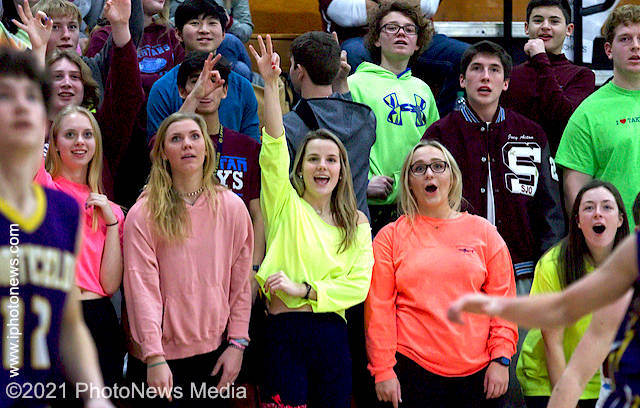
Spartans pick up home win

Members of the Maroon Platoon student fan section (left to right in the front) Stephanie Trame, Bailey Dowling, Jenna Albrecht, Lindsey Aden and Katelyn Berry along with Joey Acton and Blake Dable in the row behind them, wait for a Ty Pence ball to find net during St. Joseph-Ogden's home basketball game against Monticello. The Spartans avoided a conference loss, defeating the Sages, 57-52. Pence (not pictured) scored 25 points in victory.

Photo: PhotoNews Media/Clark Brooks


Photo of the day: January 12, 2021


Blake Franklin dribbles the soccer ball down the field.
Unity falls in soccer season opener
Rockets' Blake Franklin concentrates on dribbling the ball down the field during Unity's home match against St. Teresa on August 21, 2007. The Rockets fell by way of a 3-0 decision in their season home opener Tuesday afternoon to the visiting Bulldogs.
Photo: PhotoNews/Clark Brooks

166 make 2nd quarter High Honor Roll at SJO


Yesterday, St. Joseph-Ogden High School announced the school's second quarter honor roll receipents. This quarter, 166 students earned High Honor Roll recognition for their academic efforts. Forty-five students in both the sophomore and junior classes secured a GPA above the requisite 3.74.

An additional 77 students who earned grade point average of 3.25 or higher on the school's 4.0 scale also made the honor roll.

High Honor Roll

Freshmen

Sophomores

Juniors

Senior

Honor Roll

Freshmen

Sophomores

Juniors

Seniors


Over 180 students at Unity Junior High make Honor Roll


Seventy-nine students at Unity Junior High School earned High Honor Roll recognition for their academic performance during the second quarter of the 2020-21 school year. Meanwhile, the school administration announced another 108 students across the same three grade levels to achieve Honor Roll status.

Sixth Grade
High Honor Roll
Dominic Russell Baxley
Alex Martin Bromley
Berkley Jane Cloud
Caleb Benjamin Coy
Hudson Lee DeHart
Danika Ann Eisenmenger
Allison Renee Fenter
Bailee Mae Gadeken
Colton Ray Harmon
Kathryn Clara Knoll
Carson Wesley McCune
Landrey Michelle Mohr
Brooklyn Marie Mumm
Adam Lucas Reedy
Max Warren Rossi
Allyson Lynn Shaw
Isaac Benjamin Siegwald
Evalyn Alexandra Skibbe
Piper Estelle Staley
Grace Lynne Tempel
Jacob Michael Ward
Leah Marianne Watson
Elizabeth Johnna Wayne
Rylan Kade Wolf
Kendal Lea Zerrusen

Honor Roll

Andrew David Berkey
Grace Michele Bickers
Paige Nicole Bradley
Clare Faustina Bryant
Brody Ray Butler
Cadence Marie Chandler
Addison Tyler Davis
Aidan Dean Ellis
Reese Bella Frye
Journey Maddison Gabbard
Keegan Patrick Germano
Olivia Ashlyn Hall
Walker Dale Hall
Dustin Rose Harris
Broderick Wayne Irwin
Avery Nicole Kamradt
Rush Matthew Little
Cash Cohen McCann
Audrey Claire McDaniel
Sadie Jane Polonus
Evan Alexander Puckett
Skylar Osheania Sanders
Ethan Daniel Schaefer
Lane Edward Sexton
Alyssa Renae Shields
Jackson Leo Smith
Madison Amanda Spohn
Baileigh Marie Thomas
Grace Ann Wherley
Kendall Grace Wysong
Joel Mitchell Yergler

Seventh Grade
High Honor Roll
Anna Carolyn Amias
Cameryn Dayle Cobb
Eli Samson Crowe
Ella Jean Darnall
Callie Marie Ellars
Camden Michael Fairbanks
Margaret Rose Garcier
Isabel Grace Grob
Caden Maddox Hensch
Miles Kennedy Johnson
Mylie Emily Margaret Loftsgaard
Claire Lynn Meharry
Mason Robert ONeill
Harry Matthew Polonus
Ty Steven Rodems
Theda Marva Roether
Katie Marie Ruggieri
Vanna Lee Schriefer
Hunter James Shike
Annalise Rose Shunk
Caden Alexander Stierwalt
Ginna Mae Stierwalt
Madelyn Rose Stierwalt
Emma Marie Swisher
Paula Louise Wilson

Honor Roll

Aria Eve Battaglia
Crewe William Gene Eckstein
Olivia Breann Egelston
Dane Robert Eisenmenger
Collin William Graven
Kenley Jo Harris
Brooke Autumn Hartman
Joshua Todd Heath
Brayden Jonathon Henry
Tyler Jason Henry
Sophia Katherine Hewerdine
Lucas Alexander Hood
Logan Phillip Jeurissen
Faith Lyn Lampe
Johanna Ilene Langley
Isabelle Joy Levingston
Maxwell Cort McCabe
Deakin Frederick Moore
Isaac Julian Neverman
Dallas Jordan Porter
Mackenzie Rose Pound
Olivia Grace Rawdin
Kyla Lanae Reed
Jillian Brooke Schlittler
Liana Grace Sheets
Shelby Lynn Smith
Lauren Patricia Stratton
Ian John Taber
Sophia Louise Jean Toney
Alexander Lane Wells
Claire Morgan Zorns

Eighth Grade
High Honor Roll
Jenna Blair Adams
Avery Jean Alagna
Lindy Marie Bates
Molly Kay Baxley
Paige Leeanne Brewer
Noah Michael Bryant
Elle Makenna Cheely
Josephine Rose Cler
Madelyn Rae Darnall
Jordan Kathryn Daugherty
Ashlyn Brielle Denney
Kade Ryan Dubson
Ava Maureen Fenter
Catharine Elizabeth Ford
Sophia Safrona Frye
Sophia Ruth Hartke
Lauren Mellissa Hellmer
Dallas Anthony Hollingsworth
Alex Nathaniel Mowrer
Brady James Parr
Camryn Elizabeth Reedy
Ashley Lynn Rennels
Lydia Claire Rossi
Maegan Denise Rothe
Savannah Renee Rubin
Lauren Anne Shaw
Joseph Robert Tempel
Avery Elise Watson
McKinley Mae Weller

Honor Roll

Elizabeth Marie Anderson
Emmerson Matthew Bailey
Sophia Cathryn Beckett
Kolton Andrew Black
Michael Allan Bromley
Dakota Michael Brown-McClain
Bentten Matthew Cain
Logan Reid Church
Jacob Ivan Davidson
Ava Jane Davis
Ezekiel De Los Santos
Nathaniel Gojam DeNeal
Chloey Ryanne Duitsman
Piper Ann Farney
Paige Ann Garretson
Kadence Lynn Goff
Faith Marianne Hall
Caleb James Hoewing
Wyatt Matthew Huffstutler
Sydney Marie Jackson
Andrew Jason King
Elias Anthony Eugene Lawlyes
Kaitlynn Christine McEvoy
Avery Jarrod McGraw
Gracie Marie Meharry
Maliyah Marie Ortiz
Reigna Jolie Price
Taylor Aiyana Marie Prough
Oliver Mason Hyeok Joon Rawlings
Korben Dale Ray
Nolan Scott Remole
Garrett Francis Richardson
Ryan Benjamin Rink
Ryan James Robinson
Braden Allen Roderick
Brock Jacob Schlittler
Abigail Ruth Smith
Daniel Christopher Stein
Grant James Steinman
Owen Michael Taylor
Jacob Howell Thomas
Gavin Henry David Weaver
Jordan Jeanne Whittington
Tessah Rae Williams
Lauren Anne Williams-Scroggins
Nolan Allen Wishall


Editor's Choice


Supreme Court blocks Trump's planned National Guard deployment to Chicago

In a 6-3 decision Tuesday, the U.S. Supreme Court left in place a lower court order barring President Donald Trump from deploying Nationa...


More Sentinel Stories