by Glenn Mollette, Guest Commentator
Reports are pointing to an 8.9% raise for Social Security recipients. While it won’t feel like enough, it may buy you a sack of groceries or a tank of gasoline. This is a big maybe on the gasoline as California reports prices of over $8 per gallon.
Some of our government leadership is crying because Saudi Arabia is cutting their oil production by 2 million barrels a day. This means less oil for everyone in the grand oil supply pool. I don’t understand why anyone in our government would want to do business with the Saudis.
Buying oil from Saudi Arabia, Venezuela or any foreign entity is crazy. Why don’t we use our own oil? I’m all for green energy but we aren’t quite there yet. Make electric cars and drive them. Utilize solar energy and else anything that we can to help preserve this planet and its resources. Regardless, our country still needs oil. As long as we need oil, it would be wiser and much more cost effective to use our own oil. Put Americans back to work drilling our oil and selling it to foreign countries.
Our government has been draining our own oil reserve to try to keep the price of gasoline down. This doesn’t seem to be working very well. Plus, it puts our country at risk. When China and Russia decide to attack us, we need to be able to put fuel in our jets and ships. That would not be a good time to have to go back to Saudi Arabia and beg for oil.
We should utilize a full arsenal of energy from electric cars and a grid to supply the power. Utilize our oil, wind, natural gas and coal. Once our country can do everything without oil or coal, then we can move on from those resources. Being dependent on getting them from foreign nations doesn’t make sense, especially when we have the resources.
A loaf of bread will eventually cost Americans their 8.9% Social Security increase. Ukraine has been one of the world’s leading providers of wheat. Having Russia in control of Ukraine, a major source of the bread supply, along with their major supply of natural gas is bad news for the world.
The Crimea bridge that was recently bombed between Russia and Ukraine should have been bombed on day one by Ukrainians. Ukraine must do whatever it takes to thwart Russia’s ongoing destruction of their country. The news has been filled with fear that Russia will go nuclear in their efforts. When the nations start hurling nuclear bombs you won’t need to worry about gas, groceries and cost of living adjustments because this planet can only take so much.
Keep in mind there is still something you can do to make a difference – vote. Clear your calendar for voting. If you don’t vote then don’t complain about our government, inflation, rising interest rates, gasoline prices and more. I know it doesn’t feel like your one vote matters, but it truly counts. The only way you can bring about change is to clear your schedule, take the time, and vote.
Dr. Glenn Mollette is a syndicated American columnist and author of Grandpa's Store, American Issues, and ten other books. He is read in all 50 states. The views expressed are those of the author and are not necessarily representative of any other group or organization.
This article is the sole opinions of the author and does not necessarily reflect the views of The Sentinel. We welcome comments and views from our readers. Submit your letters to the editor or commentary on a current event 24/7 to editor@oursentinel.com.
StatePoint Media -- As the leaves turn more colorful and tempertures begin to drop. Little critters are going to be looking for somewhere warmer to avoid the fall chill. If you hate the idea of bugs in your home, you’re in fine company -- 1 in 3 Americans have seriously considered burning down their own home after experiencing a bug infestation, according to a new survey.
The study, commissioned by Zevo and conducted by OnePoll, found that 66% of respondents are willing to do “nearly anything” to get rid of bugs at home -- including fumigating their entire home (51%), throwing the nearest thing at it, no matter what that nearest thing is (43%) and even DIYing a flamethrower (35%). Others have changed their diet and lifestyle to avoid sightings at home, with 59% saying they will even refrain from keeping fresh fruit in their homes or buying houseplants out of fear that it will attract flying insects.
Photo:Pexels/Francisco Sanchez
In fact, some people would rather just leave it all behind and start over somewhere new. More than half of respondents (52%) have considered moving because of bug infestations, and of those who considered that option, 69% actually followed through and packed up their things.
When it comes to putting up with bugs, there are a number of home woes people would prefer to live with, including broken appliances (29%), creaky floors (26%), broken windows (26%), not having television connections (25%) and even rodents (24%).
Giving how bugged by insects people are, it’s no wonder that they have come up with some pretty creative and expensive ways to try to deal with the problem, with 48% of survey respondents having turned to DIY “hacks” and the average person spending $177 on creating homemade methods to deal with bugs. Some of the methods mentioned by respondents include using cinnamon, coffee grounds and even maple syrup to get rid of bugs. One person even recalled pouring gasoline on bugs to drown them.
Of course, many of these homemade solutions produce iffy results at best or are downright dangerous. The bug biology and behavior experts at Zevo say that if you want to rid your home of pests, there are much easier and more effective ways to go about it that don’t involve putting your home on the market and relocating. Here’s an effective two-pronged approach you can try for killing bugs and preventing future infestations:
1. Go worry-free. Most traditional insect sprays on the market today use synthetic pyrethroids as their active ingredients, which can have a noxious smell and make a room uninhabitable after spraying. For a solution that’s safe for people and pets when used as directed, check out Zevo Instant Action Sprays, which rely on essential oil to target and shut down biological pathways found in insects. The brand carries four different sprays to target everything from cockroaches and ants to yellowjackets and crickets.
2. Safeguard entry points. Pests enter the home most typically through windows, doors and the garage. Check screen doors and windows for tears, and patch or replace them. You can also plug Zevo Flying Insect Traps into outlets in areas where bugs typically gather in your home, like kitchens, bathrooms, garages and entryways. The traps use a combination of UVC and blue light to attract and trap flying insects, offering continuous defense for up to 45 days or until the trap is full.
To learn more about defending your home against insects, visit zevoinsect.com.
The next time you spot bugs, put down the gasoline can and the flamethrower. Simple, worry-free solutions exist that can help you maintain a bug-free home and your sanity.
Sleeping on your back contributes to snoring and blockages, especially as you age and the muscles in the throat become looser. Sleeping on your side could help improve your sleep quality.
by Jay Hancock Kaiser Health News
I woke up in a strange bedroom with 24 electrodes glued all over my body and a
plastic mask attached to a hose covering my face.
The lab technician who watched me all night via video feed told me that I had
“wicked sleep apnea” and that it was “central sleep apnea” — a type that
originates in the brain and fails to tell the muscles to inhale.
As a journalist — and one terrified by the diagnosis — I set out to do my own
research. After a few weeks of sleuthing and interviewing experts, I reached
two important conclusions.
First, I had moderate apnea, if that, and it could be treated without the
elaborate machines, mouthpieces, or other devices that specialists who had
consulted on my care were talking about.
Second, the American health care system has joined with commercial partners to
define a medical condition — in this case, sleep apnea — in a way that allows
both parties to generate revenue from a multitude of pricey diagnostic
studies, equipment sales, and questionable treatments. I was on a conveyor
belt.
As a journalist who spent years covering the business of health care, I found
there was more motivating my expensive testing cascade than concerns about my
health.
It all began with a desire for answers: I had been feeling drowsy during the
day, and my wife told me I snored. Both can mean obstructive sleep apnea. With
obstructive sleep apnea, the mouth and throat relax when a person is
unconscious, sometimes blocking or narrowing the airway. That interrupts
breathing, as well as sleep. Without treatment, the resulting disruption in
oxygen flow might increase the risk of developing certain cardiovascular
diseases.
So I contacted a sleep-treatment center, and doctors gave me an at-home test
($365). Two weeks later, they told me I had “high-moderate” sleep apnea and
needed to acquire a continuous positive airway pressure, or CPAP, machine, at
a cost of about $600.
Though I had hoped to get the equipment and adjust the settings to see what
worked best, my doctors said I had to come to the sleep lab for an overnight
test ($1,900) to have them “titrate” the optimal CPAP air pressure.
“How do you treat central sleep apnea?” I worriedly asked the technician after
that first overnight stay. She said something about an ASV (adaptive
servo-ventilation) machine ($4,000). And one pricey lab sleepover wasn’t
enough, she said. I needed to come back for another.
(Most procedures and devices mentioned in this article were covered or would
have been covered by insurance — in my case, Medicare, plus a supplemental
plan. Unnecessary care is a big reason Americans’ insurance costs — premiums,
copays, and deductibles — tend to rise year after year.)
As a journalist who spent years covering the business of health care, I found
there was more motivating my expensive testing cascade than concerns about my
health.
The American Academy of Sleep Medicine, or AASM, a nonprofit based near
Chicago, decides what is sleep apnea and how to treat it. Working with sleep
societies around the world, it publishes the International Classification of
Sleep Disorders, relied on by doctors everywhere to diagnose and categorize
disease.
But behind that effort lie considerable conflicts of interest. Like so much of
U.S. health care, sleep medicine turns out to be a thriving industry. AASM
finances its operations in part with payments from CPAP machine manufacturers
and other companies that stand to profit from expensive treatments and
expansive definitions of apnea and other sleep disorders.
Corporate sponsors for Sleep 2022,
a convention AASM put on in Charlotte, North Carolina, with other professional
societies, included many of those companies, plus
Philips Respironics
and ResMed, two of the biggest
CPAP machine makers.
In a statement, AASM spokesperson Jennifer Gibson said a conflict-of-interest
policy and a non-interference pledge from industry funders protect the
integrity of the academy’s work. Industry donations account for about $170,000
of AASM’s annual revenue of about $15 million, she said. Other revenue comes
from educational materials and membership and accreditation fees.
Here’s what else I found. Almost everybody breathes irregularly sometime at
night, especially during REM sleep, characterized by rapid eye movement and
dreams. Blood oxygen levels also fluctuate slightly.
But recent European studies have shown that standards under the International
Classification of Sleep Disorders would doom huge portions of the general
population to a sleep apnea diagnosis — whether or not people had complaints
of daytime tiredness or other sleep problems.
A
study in the Swiss city of Lausanne
showed that 50% of local men and 23% of the women 40 or older were positive
for sleep apnea under such criteria.
Such rates of disease are “extraordinarily high,” “astronomical,” and
“implausible,” Dr. Dirk Pevernagie, a scientist at Belgium’s Ghent University
Hospital,
wrote with colleagues two years ago
in a comprehensive study in the Journal of Sleep Research.
“Right now, there is no real evidence for the criteria that have been put
forward to diagnose obstructive sleep apnea and rate its severity,” he said in
an interview.
Likewise, 19% of middle-aged subjects in a
2016 Icelandic study
appeared to have moderate to severe “apnea” under one definition in the
International Classification of Sleep Disorders even though many reported no
drowsiness.
“Most of them were really surprised,” said Erna Sif Arnardóttir, who led the
study and is running a
large European program to
refine detection and treatment of apnea.
Nevertheless, the official
AASM journal recommends
extremely broad screening for sleep apnea, looking for patients who have what
it defines as illness. Everybody 18 and older should be screened every year
for apnea if they have diabetes, obesity, untreated high blood pressure, or
heart disease —
even if they have never complained
about sleep problems, the group says.
AASM “continually evaluates the definitions, criteria and recommendations used
in the identification of sleep apnea and other sleep disorders,” Gibson said
in the statement. Meanwhile, routine screening by primary care doctors “is a
simple way” of gauging whether a high-risk patient may have obstructive sleep
apnea, the statement said.
The U.S. Preventive Services Task Force, an authoritative body that reviews
the effectiveness of preventive care, takes a conservative view, more like
that of the European researchers, concluding there is
“insufficient” evidence
to support widespread screening among patients with no symptoms.
After all my reporting, I concluded that my apnea is real, though moderate. My
alarming reading in the overnight lab — diagnosed quickly as central sleep
apnea — was a byproduct of the testing machinery itself. That’s a
well-described phenomenon that occurs
in 5% to 15% of patients.
And when I looked closely at the results of my at-home diagnostic test, I had
an epiphany: My overall score was 26 breathing interruptions and blood-oxygen
level declines, on average, per hour — enough to put me in the “high-moderate”
category for apnea. But when I looked at the data sorted according to sleeping
positions, I saw that I scored much better when I slept on my side: only 10
interruptions in an hour.
So I did a little experiment: I bought a $25 pulse oximeter with a smartphone
app that records oxygen dips and breathing interruptions. When I slept on my
side, there were hardly any.
Now I sleep on my side. I snore less. I wake up refreshed. I’m not daytime
drowsy.
None of my specialists mentioned turning on to my side — known in medical
parlance as “positional therapy” — though the intervention is recognized as effective by many researchers.
“Positional patients … can sleep in the lateral position and sleep quite
well,” said Arie Oksenberg, a sleep researcher formerly at Loewenstein
Hospital in Israel.
But it’s not easy to find this in
the official AASM treatment guidelines, which instead go right to the money-making options like CPAP machines,
surgery, central apnea, and mouth appliances.
“Positional therapy is an effective treatment option for some patients,” said
the AASM’s Gibson. But she said there are concerns about whether patients will
sleep on their sides long term and whether trying to stay in one position
might cause sleep interruptions itself.
It’s true that And it often takes
practice. (Some people tape a tennis ball to their pajamas to keep them off
their backs.) Even conservative sleep doctors say CPAP machines are the best
solution for many patients.
But there is a largely overlooked alternative.
“Are we missing a simple treatment for most adult sleep apnea patients?” was
the name of a
2013 paper
that Oksenberg and a colleague wrote about positional therapy.
In my case, the answer was “yes.”
Jay Hancock is a former KHN senior correspondent.
KHN (Kaiser Health News) is a
national newsroom that produces in-depth journalism about health issues.
Together with Policy Analysis and Polling, KHN is one of the three major
operating programs at KFF (Kaiser
Family Foundation). KFF is an endowed nonprofit organization providing
information on health issues to the nation.
Urbana -- More than seven million people are walking the Earth with a new knee or hip.
And if you’re suffering from debilitating pain, the thought of becoming total joint replacement patient seven million one is probably appealing. But James Murphy, MD, says try not to think about it until your mid-60s.
And Dr. Murphy, an orthopedic surgeon at OSF HealthCare in Urbana, Illinois, should know. He comes from a long line of orthopedic surgeons and has been immersed in the field for decades.
Joint injuries
Generally speaking, a joint is where two bones meet in the body to allow movement.
Dr. Murphy explains that joint injuries can come suddenly, like one during a basketball game, and those are often treated with a brace or surgery. Joint injuries can also develop over many years – the wear-and-tear injuries. Treatments for those include medication, injections or surgery.
Replacement
Every person has unique joint health circumstances, but Dr. Murphy advises you wait until at least age 65 before considering a total joint replacement. He says if you get the surgery at, say, age 40, you may just have to do it again in 15 or 20 years.
Photo provided
Dr. James Murphy Orthopedic Surgeon OSF HealthCare
Until then, try the aforementioned treatments: medication (over-the-counter or prescription), braces or injections by a health care provider. Losing weight helps, too. Dr. Murphy says dropping five pounds equates to taking 25 pounds of pressure off your knees.
Dr. Murphy also says holistic remedies like black cherry juice or turmeric have been proven to help.
“Black cherry juice is something I’ve had patients swear by. They’ve taught me about it,” Dr. Murphy says. “So, I don’t think you need a doctor’s advice for [holistic remedies] like that. But, seeing a doctor in conjunction with all that is a good idea because there might be some things that can be added.”
When it’s time for surgery, here’s what you can expect.
First, your doctor will want to know about anything that may complicate the procedure. This includes a history of urine infections or recent or upcoming dental work (beyond a normal checkup).
“They’re drilling into the tooth, and there could be bacteria from your mouth that can get into your bloodstream. If that makes its way to a total [replaced] joint, it could be devastating,” Dr. Murphy says, because our immune system can’t fight bacteria when it attaches to metal.
“So that can be avoided with a simple antibiotic prescription around the time of the dental work,” he says.
On surgery day itself:
“What a joint replacement entails is making an incision and safely dissecting all the way down to the joint,” Dr. Murphy explains. “Then, shaving away the arthritic joint and replacing it with an implant that’s made of metal and plastic.
“And that becomes your new knee, hip or ankle.”
Recovery
Dr. Murphy says what used to be a five to seven day stay in the hospital is now two to three days thanks to advances in the field.
“It’s better for the patient, for their experience and their outcome, to get out of the hospital quickly,” Dr. Murphy says. “There are different things we do as far as pain control and therapy to get people in and out of the hospital as quick as is safe after surgery.”
Dr. Murphy advises patients to work on range of motion in the first couple weeks post-surgery. That’s at home and with a physical therapist. After week three, most patients start to notice a difference. By two months, they feel like they have a normal life again.
And it’s important to define “normal life,” Dr. Murphy says.
“[New joints] are meant to walk. They’re meant to walk as far as you’re willing to walk,” Dr. Murphy says. “They’re not meant for the cutting aspect of basketball, tennis or those kind of sports.
“Golf is perfectly fine. Swimming is great. Riding a bike is perfect. Rowing is great. It’s just the pounding on the knee that you want to avoid.”
BLOOMINGTON -- Late in the second quarter of their road football game at Central Catholic, the St. Joseph-Ogden football team had the ball inside the five-yard-line poised to score. The Saints repelled at one-yard dive play and then a fourth-and-goal pass attempt by the Spartans. It was a palatable moment in the game that supercharged both the BCC offense and defense on their way to a 42-20 win over SJO.
Taking possession on the two-yard line, Central Catholic marched down the field 98 yards with ease to take the lead on an 18-yard pass from Central's Colin Hayes to Ryan Hoeferle to break the tie on the scoreboard with 31 seconds left in the half.
Spartans' Colin Wayland and Aiden McCorkle bring down Central Catholic's ball carrier. The St. Joseph-Ogden defense gave up 455 yards in the team's 42-20 loss on Friday.
Photo: PhotoNews Media/Clark Brooks
Unable to regain their first quarter swagger and precision when action resumed after halftime, the St. Joseph-Ogden offensive effort against an embolden and confidenet BCC defensive unit yielded just 22 yards in the second half.
Junior Justice Wertz led the Spartans' ground attack with 66 yards. Coy Taylor was held to just 15 yards rushing, and Tyler Burch ran the ball in on 4-yard run for a touchdown in the fourth quarter.
SJO's passing game faired better against BCC. Taylor caught 12 passes for 132 yards, including one for a 25-yard touchdown in the first quarter. Burch, a senior, caught a 19-yarder in the first quarter.
Logan Smith finished the game 13-for-24, passing for 151 yards and had a negative seven yards rushing.
In stark contrast, the Saints, who moved to 4-2 overall, finished contest with 455 total yards against SJO's 170.
The Spartans, now 3-3 overall and 2-3 in IPC, hosts Pontiac this Friday. For a quaranteed playoff berth, SJO has to win this week's game and beat the last two teams on their schedule, which include Rantoul and Paxton-Buckley-Loda.
Game Slideshow
St. Joseph-Ogden at Bloomington Central Catholic
September 30, 2022
PEORIA -- Urbana's Julio Angrave ran a 16:10.05, finishing 54th out of a pool of 292 runners at the Peoria Cross Country Invitational on Saturday. As a team, the Tigers finished in 18th place out of the 41 competing teams.
Urbana's Julio Angrave runs in the Class 2A Cross Country State Finals on Saturday, November 6, 2021. The senior led the Tigers' harrier squad to the finish line turning in a time of 16:10.05 on the same course last Saturday at the Peoria Cross Country Invitational. PhotoNews Media/Clark Brooks)
This year's 1A/2A race was won by Marion with 136 points. Normal University placed second with 152 points, and Mather High School was third, edging-out Champaign Central for the bronze medal position by 32 points with 172.
Tigers' Hudson Coady, Michael Allison, Cordaro Sims, and Brian Allison contributed toward their final team score of 443.
Coady finished 78th at 16:32.34, Michael Allison crossed over at 16:39.00, and Cordaro Sims was next to finish a second later behind his teammate at 16:40.60. Brian Allison rounded out the top five runners in 133rd place with a time of 17:05.37.
The Urbana boys program also had strong finishes from sophomores Mohammed Amrani and Dereje Jahiel, who clocked times of 17:07.76 and 17:33.98, respectively.
The Tigers will run again on Tuesday on the University of Illinois Cross Country Course at the annual Twin City Meet and then again on Saturday for the Big 12 Conference title back at Detweiller Park.
PEORIA -- The Urbana girls' cross country team finished 23rd in the team standings out of 34 teams at the Peoria Cross Country Invitational on Saturday, October 1.
Senior Maya Stori led the Tigers' squad to the finish line circumventing the course at Detweiller Park in 20 minutes and 6.49 seconds in the Class 1A/2A race. 80th overall, she finished behing Bloomington's Alexandra Noona and ahead of Morton's Cali Fitzgerald.
Later, Stori was followed into the chute by teammate Abby Fairbanks, who stopped the clock at 20:10.80 for best time in the 3-mile distance this season. Prior to Saturday's race, Fairbanks' top finish this season was 21:09.70.
Also scoring points for UHS were Ellie Scully, Noam Kramer, and Kaleigh Bell. Scully finish 158th at 21:50.16, Kramer 180th at 22:34.20, and Kaleigh Bell finished out the top-five runners with a time of 22:37.05, good for 182nd overall.
Lavie Maisha and Brianne Wefel finished the race with times of 22:55.61 and 23:18.61 respectively.
The 1A/2A title was won by Crystal Lake South with 88 points. Dunlap tallied 105 points to take second, and Glenwood finished third in the team standings with 148 points.
The Tigers will run again this Tuesday on the University of Illinois Cross Country Course at the annual Twin City Meet and then again on Saturday for the Big 12 Conference title back at Detweiller Park.
RANTOUL -- It not very often you see a soccer player score a goal or two, get credit for an assist, AND make a save while playing at the keeper position all in the same game. Thursday, St. Joseph-Ogden's Jackson Greer did just that to help the Spartan post a conference shutout over the Rantoul Eagles.
St. Joseph-Ogden's Jackson Greer dribbles the ball down the field against Rantoul. The senior scored two goals in the 5-0 win for the Spartans. Photo: PhotoNews Media/Clark Brooks
Showing he is an asset anywhere on the pitch, Greer helped SJO get on the scoreboard with a pass to Alex Accosta for the open goal of the game in the first half.
At the start of the second half Greer replaced Hunter Ketchum, who had one save, at keeper. While guarding and directing teammates on the field, Greer deflected one of the few solid threats made on the SJO goal during his short stint. He returned to the offensive side of the field, and with 23:10 left on the clock he put an unassisted shot into the north goal at the Rantoul Family Sports Complex. Minutes later, on a pass from the team's top defender Will Page, Greer scored a second goal to give the Spartans at 5-0 lead.
Between Greer's assist and first solo shot, freshman Zach Harper padded his stats with two goals. He notched the first one on a pass from Will Childers in the first half to give St. Joseph-Ogden a 2-0 lead. Harper than put his team up 3-0 after he guided the ball into the net on a corner kick.
Greer, Ketchum and Carter Mabry each recorded one save as the Spartans improved to 12-4-1 on the season.
The Spartans face St. Anne tonight at home in their final contest of their run of five consecutive matches in a row.
Watseka -- St. Joseph-Ogden's Lily Rice defeated Watseka's Annika Greene in tie-break 8-7 (6) on Tuesday. Spartan doubles duo Halie Harms and Emma Thurman cruised to a 8-4 victory in the team's road match over Warriors' Annika Greene and Marisa Clark at #3 doubles. SJO lost the dual match, 7-2.
Box Score:
St. Joseph -- The St. Joseph-Ogden soccer team fell 3-0 to visiting Bloomington Central Catholic after their Illini Prairie Conference match. Starting keeper Hunter Ketchum made three saves and backup goalie Jacik Slowikowski also recorded three saves for the Spartans (10-4-1).
The Saints got first half goals from Boyden Chaon and Jarrett Wieduwilt. Jaylen Bischoff scored the third time for BCC.
Rockets 2, Olympia 6
Sanford -- Nolan Remole scored once and later feed a pass on an attack that allowed Gabe Pound to score in the second half for Unity against the visiting Spartans. After Pound's goal, Olympia scored two more to go up 6-2 in the non-conference match.
The Rockets' regular season contest winds down next week with a home match against Oakwood on Monday. The team is on a bus for a roadtrip to north Champaign to face the Sabers of St. Thomas More.
Don't miss our latest stories and photos from the communities we serve. Get local news and views at home, at the office, or on the go with our e-subscription. Best of all its free!
The Sentinel covers news, sports, and local happenings from seven communities, which include St. Joseph, Royal, Ogden, Sidney, Tolono, Sadorus, Pesotum, Philo, and Urbana. Get daily weather, local high school sports scores, great recipes and more.
Family Features -- If the prices of your favorite ingredients have you dreading the next trip to the grocery store, finding ways to stretch your budget can help you feel better at the checkout counter.
One such way: turning to versatile ingredients that help make every dollar count by using them in a variety of your family’s favorite meals. Flavorful options like mushrooms enhance recipes by extending portions when you use a process called “The Blend.” Blending finely chopped mushrooms with ground meat allows you to extend the volume of dishes like burgers, tacos, pasta, wraps and more.
Photo provided
Simply chop your desired mushroom variety to match the consistency of ground meat, blend the chopped mushrooms and meat together then cook your blend to complete the recipe. This Blended Crunchy Mushroom Wrap is a perfect example of an easy yet delicious way to take your grocery budget further.
Visit MushroomCouncil.com for more blended recipe ideas.
Put it together
In large skillet over medium-high heat, heat olive oil.
Next, cook onions 1-2 minutes until translucent.
Add mushrooms and ground beef. Cook about 5 minutes, or until beef is no longer pink.
Stir in taco seasoning. Cook 2-3 minutes and then set aside.
Lay one large flour tortilla on flat surface. Spread 2 tablespoons mushroom-meat mixture on center of tortilla.
Drizzle dollop of nacho cheese over mushroom-meat mixture. Top meat with one tostada shell then spread thin layer of sour cream over tostada shell.
Top with shredded lettuce, diced tomatoes and shredded Mexican cheese then one small tortilla. Make sure not to overstuff so wrap doesn’t break apart while cooking.
Fold edges of large tortilla toward center until completely covered.
In hot skillet, generously spray with nonstick cooking spray. Carefully place wrap seam side down on skillet. Cook 2-3 minutes until golden brown.
Flip and cook other side until golden brown. Repeat with remaining mushroom-meat mixture, tortillas and toppings.
Cut wraps half and serve.
NAPSI -- The real estate market is cooling down: Home inventory rose 9.6% between May and June. Interest rates are up. Thirty-year mortgage rates rose to 6.29% a week ago to their highest level since October 2008. And, inflation is still a problem for much of the country.
"The housing market in Illinois is showing signs of a return to normal conditions," Daniel McMillen, Head of the UIC Stuart Handler Department of Real Estate (SHDRE) said in a housing price forecast for the state to Illinois Realtors. "Prices have declined since their peak in June, sales are declining, and foreclosures are increasing. Our prediction is that house prices will continue to decline modestly over the next few months, while the number of sales will show its usual late-year slowdown."
Consequently, potential buyers are delaying their searches and home sellers are facing some daunting challenges.
But the good news is that these challenges are not insurmountable. Amanda Zachman, founder and executive director of MV Realty in Delray Beach, Florida, offers four guidelines to help you sell your home quickly—in any market.
1. Don’t overprice your home. Many homeowners hope to capture the attention of a single buyer willing to pay an inflated listing price but they end up scaring away potential buyers. And if you do attract a buyer at the inflated price, you’ll limit your negotiating power because the buyer has no competition. A better strategy is to list your home at a price equal to or slightly below market value; homeowners who do so often start a bidding war.
The lesson: "You will likely end up with a higher sales price if you begin with a lower list price," says Zachman.
According to Redfin, last month just 37.3% of homes in Illinois sold below asking price.
2. Find a good agent. Yes, you can sell your home without an agent. But should you? The answer is a decisive “no.”
Homeowners offer 6% less than the asking price of an FSBO because they believe they are entitled to a built-in discount since no agent is involved. A seasoned, licensed agent has comprehensive knowledge of the local market and will make the selling process as lucrative, painless and surprise-free as possible.
During a recent sale, for example, Zachman noticed a charge of $6,000 from a title insurance company on the closing statement. She realized that since the sellers had purchased the home less than three years ago, they could use their last policy. Her catch eventually saved the sellers $2,000.
"It’s unlikely that an inexperienced agent would have noticed this," she remarks. To assess the experience of potential agents, Zachman recommends careful research: "Do they know your area? Have they sold other homes in your area? What customer ratings have they earned? These seem like obvious questions, but they’re easy to forget when you’re eager to start the listing process."
3. Take your time. Speaking of eagerness, don’t rush to put your home on the market if it’s not ready. "Don’t list a messy or cluttered house," Zachman cautions. "You want to make sure that it’s orderly, show-ready and professionally photographed. Cellphone photos just won’t cut it."
She adds that the listing should contain all relevant information and that homeowners are prepared to respond to an offer. According to Zachman, "the most important timeframe for a listing is the first 14 days. You need to put your best foot forward so that the listing doesn’t get stale.”
4. Prepare for short-term inconveniences. Bad news for those who hate vacuuming: Your home should stay clean throughout the listing process.
“If you’re pricing your home appropriately, you can expect many showings and some will be at the spur of the moment,” Zachman points out. “But the right price leads to a fast sale, so you won’t be inconvenienced for long. Any effort you put toward mopping floors, washing windows and making beds will be well worth it.
"There are still ample opportunities for both buyers and sellers in this market," Zachman concludes. "If you follow these guidelines, you can successfully navigate through all kinds of market cycles. So, list at a reasonable price, work with an agent experienced in your market, remember that preparation is key, and expect a few inconveniences that shouldn’t last too long. Good luck!”
Aaron Mulherin, owner of AM Glass, goes over company financial details with his SCORE mentor John Brockhardt. There are many options for financing a new or existing business, and a mentor can help guide you.
NAPSI -- If you’re wondering how to finance your startup, you’re not alone. Depending on your business, financing it can either be relatively simple, such as drawing on your personal savings, or more complex, perhaps requiring you to seek loans or investors.
Here are some common ways to finance a business, along with pros and cons to keep in mind:
Personally Finance Your Startup
In the digital age, many small businesses can be up and running with little to almost no capital, which can make financing your business with your own money more realistic.
Personally financing your business has some distinct advantages—you retain full control over your company, take on zero debt and have no loan payments to worry about.
On the flip side, you could lose money if the business doesn’t work out.
The bottom line is that if you’re willing to take on personal financial risk, using your own money is one of the most straightforward methods of funding your startup, while maintaining full control.
Ask Friends and Family For Financial Support
Help from friends and family is another common method for financing a business. This could look similar to personal financing or a private loan.
The advantages depend on the terms of the contributions. You might retain full control over your company and not have to take on debt or you may have to relinquish some control and agree to repay what you’ve received plus interest.
Take Out a Bank Loan
Banks and credit unions are another financing option. However, you’re taking on debt and will need to make regular payments on the loan, which can cut into cash flow. On the plus side, financing your business with a loan means that you retain full control of your company.
Be prepared to show a bank a business plan, expense sheets and financial projections, often for the first five years.
Securing a bank loan is a challenging process. A mentor can help you prepare a loan application, so you have the best chance of securing the loan you need.
Bring in an Outside Investor
Bringing in an outside investor is typically not a realistic option for most businesses. The experts at SCORE found that only about 2% of businesses have a business model that would interest investors.
Most often, equity investors require not only a percentage of ownership in the company but an “exit plan”—otherwise known as your plan for how they’ll recoup their investment and see a healthy return.
With an investor, though, you get relatively quick access to capital without periodic loan payments, potential access to business expertise, and connections you might lack.
If your startup requires a significant capital investment, bringing in an outside investor may be a smart option.
Rally Support Through Crowdfunding
Once considered an unconventional way to finance your business, crowdfunding is now a common method for raising startup funds.
The structure of a crowdfunding campaign depends on your platform host. The idea is to encourage small contributions from a large pool of people. Funders receive gifts for their support which usually includes the product or service you sell.
The downside to crowdfunding: it takes a lot of effort and money and failure is very public, unlike with private ventures.
Choosing the Right Financing Option is Key
As you develop your startup, connect with a SCORE mentor. They can guide you toward the right financing options for your needs and lead you on the pathway to success.
Learn more about traditional and creative ways to help your business by visitig www.score.org.
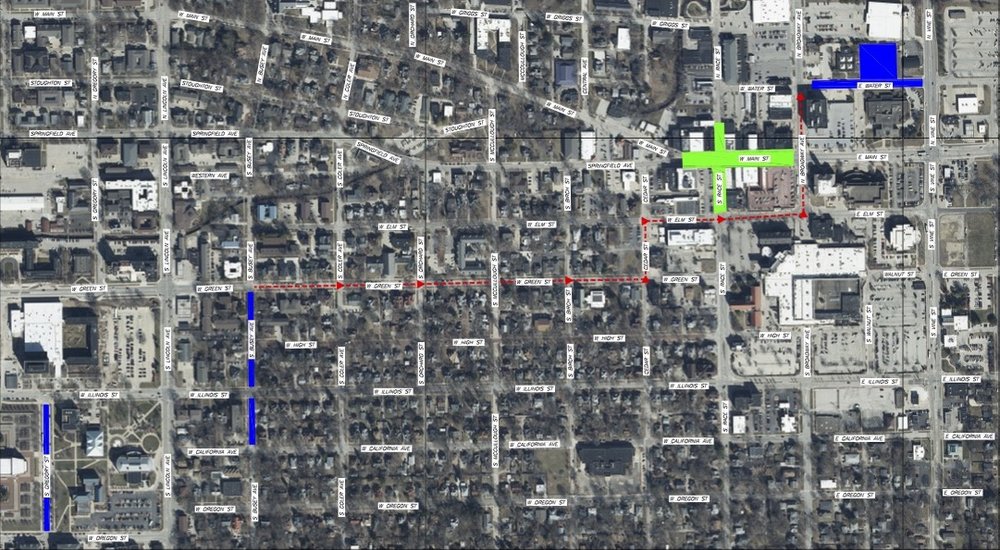
URBANA -- The annual Champaign-Urbana Pride Fest Parade will be held this Saturday, October 1, starting at 11am in Urbana. The route will start on the corner of Busey and Green Street and head east on Green to downtown Urbana.
Judges for this year's parade are Xander Hazel, Executive Director of the Champaign Center Partnership, long-time local radio personality Diane Ducey, and Berry Stevenson, the Executive Director of the Greater Community AIDS Project. Judges will review entries as they pass from under a tent on the corner of Race and Elm.
This year's awards include the Best Float/Vehicle, Best Marching Group, and an Overall Best of Show. Winners will be announced at the Fair Stage in downtown Urbana at 12:30pm.
Parade route
The parade route will terminate near downtown Urbana at the Pride Fest Fair, which starts at noon until 4pm. In addition to live entertainment, dozens of local artists displaying their work will be onhand, informational booths for community groups about the activities or services, pop-up vendors, and food from the downtown restaurants.
For more information on Saturday's parade and Pride Week activities contact Uniting Pride of Champaign County at info@unitingpride.org.
URBANA -- The Urbana School District will host a virtual Family Forum tonight via Zoom from 6-7:30pm.
Topic for tonight's discussions, after a welcome back statement and annual review, will focus on the district's goal and the upcoming Equity Audit in October.
The upcoming Equity Audit will help identify areas of strengths and weakness within the district concerning diversity, inclusion, and deficiencies in available educational opportunities for students. Focus groups comprised of families and district staff members will be meet October 17-21.
To join tonight's zoom meeting, the first of this academic calendar year, go to https://usd116org.zoom.us/j/92586421834 on Zoom. The meeting ID is 925 8642 1834.
For more information contact the school district at https://usd116.org/admin/.
Unity's Emmalee Atkins and Kaitlyn Schweighart put away six kills each in the team's home match against St. Teresa on Monday. Their effort was not enough for the Rockets, who fell to the visiting Bulldogs, 2-1.
JJ LeFaivre, who recorded one block, contributed five kills to the UHS cause. Schweighart also had 11 digs and hammered four aces in the non-conference clash.
The Rockets won the opening set 26-24 and then dropped the next two, 25-17, 25-23.
Spartans crush visiting Tribe
The St. Joseph-Ogden soccer team went on a first-half rampage, scoring three goals in the first half of their home match against Judah Christian on their way to a 4-0 victory on Monday.
Sophomore Alex Accosta started scoring effort with an unassisted shot between the post. Later, Aiden Cromwell booted one in to put SJO up, 2-0. Before the midgame break, Ryker Lockhart's pass allowed Collin Thomey to join the goal party.
Will Childers, a senior defensive specialist, also recorded a second-half assist after sophomore Logan Mills found the net for the fourth unanswered score of the game.
The win kicks off a grueling schedule for the Spartans (10-3-1), who play five-consecutive matches this week, four at home. This afternoon, SJO will host Central Catholic from Bloomington for a conference confrontation and are back on the pitch on Wednesday for a non-conference bout against Iroquois West.
On Thursday, the soccer team travels to Rantoul to face the Eagles and back at home again on Friday for a varsity-only match against St. Anne.
Unity loses soccer match, 7-0
In non-conference action on Monday, the Unity soccer team was shut out 7-0 by the Fisher Bunnies. The Rockets travel to Stanford today to take on the Spartans of Olympia high school in another non-league match.
URBANA -- Applications for American Rescue Plan Act (ARPA) funds available through the City of Urbana are accepted now through November 16. Urbana has $12.97 million to distribute to help those affected by the Coronavirus pandemic that started in March 2020.
"The city is seeking applications for organizations that will provide services meeting the funding goals. Rather than households or businesses seeking individual assistance, applicants should be organizations who will use the funds to facilitate one of the funding goals," according to the City of Urbana website.
The goals include:
Public Health and Safety
Improve accessibility of public recreation space and youth programming
Increase support for community violence interventions
Adequate and Affordable Housing
Reduce housing costs for those that need it most
Human Rights and Social Services
Increase availability and affordability of mental health services
Increase availability and affordability of food
Economic Recovery and Development
Increase job training and placement opportunities
Provide relief and support for local businesses
Sustainable Infrastructure
Invest in infrastructure to increase community health, safety, and future resilience
In the city's distribution plan, individuals or families that need help paying rent or businesses desiring assistance covering their expenses do not qualify for the program. Instead, funding from the Coronavirus State and Local Fiscal Recovery Funds (SLFRF) program, a component of the ARPA passed in March 2021, will be given to organizations with programs that assist with individual housing or provide small business assistance. There is no minimum or maximum funding amount, and the money can be utilized to cover expenses necessary to meet the city's stated goals.
Participating organizations can use the money for "facility investments, personnel, direct assistance to community members, internal capacity building, and administrative costs."
To apply for funding go to https://ccrpc.gitlab.io/urbana-arpa/apply/.
URBANA -- OSF HealthCare Heart of Mary Medical Center named Erin Rogers, MBA, interim president for the Urbana healthcare facility. Effective today, she replaces Dr.Jared Rogers, who recently retired.
In her new role she will be responsible for aligning the Heart of Mary Center with OSF HealthCare's corporate vision. She will direct internal operations to ensure that high-quality, cost-effective health care is will always be received by patients.
Photo provided
"I look forward to carrying forward a culture of collaboration and integration that provides a safe and supportive environment for patients and Mission Partners [employees]," Rogers said. "I'm excited about the vision for the future at OSF Heart of Mary and am committed to embracing the Catholic health care heritage and supporting the Sisters’ Mission of serving with the greatest care and love."
Joining the OSF HealthCare in 2017, Rogers recently served as regional director of business development. Before tenure with the OSF HealthCare Ministry, Rogers spent many years in operations and posesses certification as a Medical Practice Executive. With her ability to build strategic relationships and maintain them, the board of directors anticipates further growth of services provided to the Champaign-Urbana community and the county.
Rogers earned her Bachelor of Science degree at Illinois State University. She continued her education pursuing a Master of Education in Early Childhood Special Education Administration from the University of Illinois and then returned to ISU, where she was awarded with a Master of Business Administration.
by Glenn Mollette, Guest Commentator
Life is one day at a time. You don’t have tomorrow. You hope for tomorrow but it’s not guaranteed. We plan for tomorrow. We save for tomorrow and look forward to tomorrow.
Today is what we have. If today is the last day of your life, how is it going? If you knew for sure, how would you want to spend your last precious 24 hours? You wouldn’t be planning next year’s vacation. No, you would want to get in all that you could possibly do. Only you know for sure how you would want to spend your day and everyone is different. Maybe you would spend your day with loved ones or maybe you would want to be strolling in the mountains or by the oceanside. Maybe you would want to spend your day eating ice cream, hamburgers and pizza. If it’s your last day then why not?
I like ice cream, hamburgers and pizza but my doctor doesn’t recommend them as a daily diet because of the hopes of tomorrow. There are ways that we can shorten our days and too much of what we enjoy is not always very good for us.
Since life is one day at a time, we can’t go back and repeat yesterday. All the good you did is in the past. All the mistakes you made are in the past. You can spend the rest of your life wishing you could repeat high school, college or an old relationship. Actually, you are better off if you don’t sit around and think about it all the time. It’s good to remember the good memories of family, friends, life’s successes and joys but they are in the past. This often makes us sad because we know we can’t relive some of those great moments of life. It’s best to give thanks for them and move forward.
Today is a good day to make some more memories – good ones. Living your life today regardless of what you are doing is the life you have. Make the best of it by enjoying your life. Do what you enjoy. Be good to yourself. Don’t beat up on yourself. Don’t live your life fighting with others. Do your work. Find joy in your work or move on to a work that you do enjoy. Find ways to reduce stress and to be happy.
Keep in mind that you can’t make everyone else happy and don’t take on everyone else’s problems. You probably have enough of your own.
Be patient. All good things take time if they are worthwhile.
Finally, just in case you do live a bunch more years, live today in such a way, that you can look back to today and remember it as a good day.
Dr. Glenn Mollette is a syndicated American columnist and author of Grandpa's Store, American Issues, and ten other books. He is read in all 50 states. The views expressed are those of the author and are not necessarily representative of any other group or organization.
This article is the sole opinions of the author and does not necessarily reflect the views of The Sentinel. We welcome comments and views from our readers. Submit your letters to the editor or commentary on a current event 24/7 to editor@oursentinel.com.
Taking on one of personal care's least-talked-about problems
(PRNewswire) Chicago -- There are products for sweaty armpits, sweaty feet and sweaty faces. But when sweat shows up somewhere a little less comfortable to talk about, the options get limited fast.
Chicago-based Cheek Sheets is looking to change that.
Cheek Sheets today announced the launch of its namesake absorbent sheets, an ultra-thin, dry and discreet personal-care product designed to help absorb sweat and manage unwanted moisture between the cheeks before it becomes uncomfortable, embarrassing or funky.
Discover the headlines published on each of these days from our news and sports coverage from Champaign‑Urbana and the wider community. From local news and sports to community events, politics, and opinion pieces, The Sentinel archives capture the stories that shaped life in Champaign County year after year.

 Reports are pointing to an 8.9% raise for Social Security recipients. While it won’t feel like enough, it may buy you a sack of groceries or a tank of gasoline. This is a big maybe on the gasoline as California reports prices of over $8 per gallon.
Some of our government leadership is crying because Saudi Arabia is cutting their oil production by 2 million barrels a day. This means less oil for everyone in the grand oil supply pool. I don’t understand why anyone in our government would want to do business with the Saudis.
Buying oil from Saudi Arabia, Venezuela or any foreign entity is crazy. Why don’t we use our own oil? I’m all for green energy but we aren’t quite there yet. Make electric cars and drive them. Utilize solar energy and else anything that we can to help preserve this planet and its resources. Regardless, our country still needs oil. As long as we need oil, it would be wiser and much more cost effective to use our own oil. Put Americans back to work drilling our oil and selling it to foreign countries.
Our government has been draining our own oil reserve to try to keep the price of gasoline down. This doesn’t seem to be working very well. Plus, it puts our country at risk. When China and Russia decide to attack us, we need to be able to put fuel in our jets and ships. That would not be a good time to have to go back to Saudi Arabia and beg for oil.
We should utilize a full arsenal of energy from electric cars and a grid to supply the power. Utilize our oil, wind, natural gas and coal. Once our country can do everything without oil or coal, then we can move on from those resources. Being dependent on getting them from foreign nations doesn’t make sense, especially when we have the resources.
A loaf of bread will eventually cost Americans their 8.9% Social Security increase. Ukraine has been one of the world’s leading providers of wheat. Having Russia in control of Ukraine, a major source of the bread supply, along with their major supply of natural gas is bad news for the world.
The Crimea bridge that was recently bombed between Russia and Ukraine should have been bombed on day one by Ukrainians. Ukraine must do whatever it takes to thwart Russia’s ongoing destruction of their country. The news has been filled with fear that Russia will go nuclear in their efforts. When the nations start hurling nuclear bombs you won’t need to worry about gas, groceries and cost of living adjustments because this planet can only take so much.
Keep in mind there is still something you can do to make a difference – vote. Clear your calendar for voting. If you don’t vote then don’t complain about our government, inflation, rising interest rates, gasoline prices and more. I know it doesn’t feel like your one vote matters, but it truly counts. The only way you can bring about change is to clear your schedule, take the time, and vote.


 Senior Maya Stori led the Tigers' squad to the finish line circumventing the course at Detweiller Park in 20 minutes and 6.49 seconds in the Class 1A/2A race. 80th overall, she finished behing Bloomington's Alexandra Noona and ahead of Morton's Cali Fitzgerald.
Later, Stori was followed into the chute by teammate Abby Fairbanks, who stopped the clock at 20:10.80 for best time in the 3-mile distance this season. Prior to Saturday's race, Fairbanks' top finish this season was 21:09.70.
Also scoring points for UHS were Ellie Scully, Noam Kramer, and Kaleigh Bell. Scully finish 158th at 21:50.16, Kramer 180th at 22:34.20, and Kaleigh Bell finished out the top-five runners with a time of 22:37.05, good for 182nd overall.
Lavie Maisha and Brianne Wefel finished the race with times of 22:55.61 and 23:18.61 respectively.
The 1A/2A title was won by Crystal Lake South with 88 points. Dunlap tallied 105 points to take second, and Glenwood finished third in the team standings with 148 points.
The Tigers will run again this Tuesday on the University of Illinois Cross Country Course at the annual Twin City Meet and then again on Saturday for the Big 12 Conference title back at Detweiller Park.

 Watseka -- St. Joseph-Ogden's Lily Rice defeated Watseka's Annika Greene in tie-break 8-7 (6) on Tuesday. Spartan doubles duo Halie Harms and Emma Thurman cruised to a 8-4 victory in the team's road match over Warriors' Annika Greene and Marisa Clark at #3 doubles. SJO lost the dual match, 7-2.
Box Score:


 URBANA -- The annual Champaign-Urbana Pride Fest Parade will be held this Saturday, October 1, starting at 11am in Urbana. The route will start on the corner of Busey and Green Street and head east on Green to downtown Urbana.
Judges for this year's parade are Xander Hazel, Executive Director of the Champaign Center Partnership, long-time local radio personality Diane Ducey, and Berry Stevenson, the Executive Director of the Greater Community AIDS Project. Judges will review entries as they pass from under a tent on the corner of Race and Elm.
This year's awards include the Best Float/Vehicle, Best Marching Group, and an Overall Best of Show. Winners will be announced at the Fair Stage in downtown Urbana at 12:30pm.
Parade route